 Follow Us on Google Discover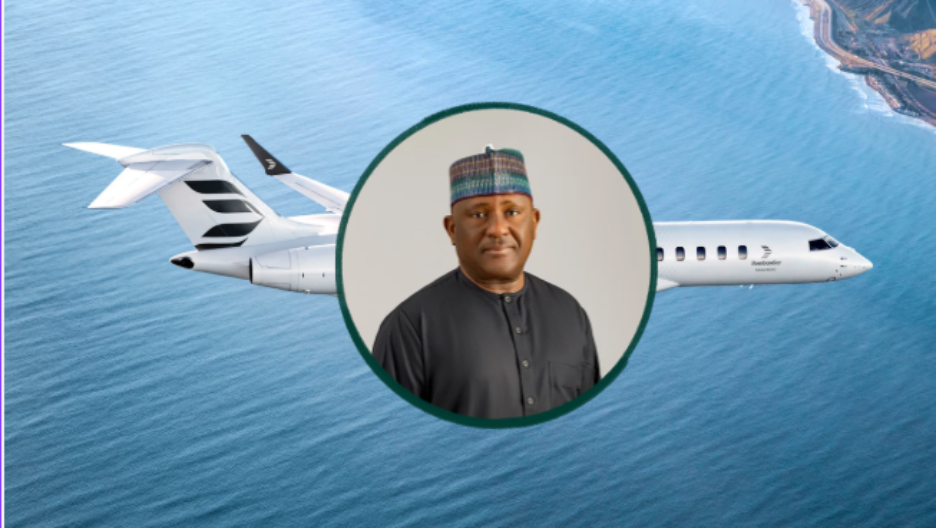
Abdul Samad Rabiu, Chairman of BUA Group and one of Africa’s most prominent industrialists, has taken delivery of a Bombardier Global 8000 private jet valued at approximately $81 million (about N110 billion at current exchange rates), marking a significant expansion of his aviation assets.
Rabiu announced the delivery of the aircraft on his Instagram stories expressing gratitude to God for the milestone.
The newly delivered Global 8000 expands BUA Group’s growing corporate aviation fleet, which already includes a Bombardier Challenger 350 and a Global 6500.
Rabiu signed the purchase agreement on December 4, 2025, at BUA’s Dubai office during a meeting with senior executives of Bombardier, the Canadian aerospace manufacturer known for producing some of the world’s most advanced business aircraft.
At the time, Rabiu described the acquisition as both a strategic business tool and a reflection of BUA Group’s long-term ambitions as it expands across multiple sectors and international markets.
What they are saying
According to Bombardier, the Global 8000 business jet combines industry-leading speed and range with a spacious cabin designed around four distinct living areas.
The aircraft is expected to offer the longest range in its class while delivering one of the fastest operating speeds in business aviation, enabling nonstop travel between major global destinations while providing enhanced comfort for passengers and crew.

It also offers a maximum range of about 8,000 nautical miles, enabling non-stop intercontinental travel on long-haul routes that would typically require refuelling stops on smaller aircraft. The jet is designed with four distinct living spaces, allowing for multiple cabin configurations that can accommodate work, dining, relaxation, and private sleeping arrangements during extended flights.
Beyond acquisition costs, ownership of the aircraft class also comes with substantial operational expenses. Aviation analysts estimate annual operating costs ranging between $1.8 million and $2.9 million, depending on annual flight hours, maintenance schedules, crew requirements, and routing complexity.
The acquisition comes at a time when Rabiu’s wealth has witnessed unprecedented growth, driven largely by the performance of his publicly listed companies on the Nigerian Exchange.
Get up to speed
According to the Forbes 2026 Billionaires Ranking, Rabiu’s net worth climbed to approximately $11.2 billion, representing a 120% increase from his 2025 valuation. The increase marks the largest single-year wealth gain recorded by any African billionaire in this year’s ranking.
Bloomberg’s Billionaires Index also places Rabiu among the continent’s fastest-growing fortunes. As of June 10, 2026, his estimated wealth stood at approximately $17.5 billion, reflecting a year-to-date increase of $7.4 billion, or 73%. His wealth rose by an additional $33.8 million on the day, according to Bloomberg data.
Much of this growth has been attributed to the strong performance of BUA Group’s listed entities, particularly BUA Cement and BUA Foods. BUA Cement, Nigeria’s second-largest cement producer, recorded revenue of N1.2 trillion in 2025 and has benefited significantly from rising investor confidence and expansion activities. The company’s share price surged by approximately 135% over the past year, substantially boosting Rabiu’s net worth.
What you should know
Founded by Abdul Samad Rabiu, BUA Group has evolved into one of Nigeria’s largest industrial conglomerates with interests spanning cement production, food processing, infrastructure, mining, manufacturing, and real estate. Over the past decade, the group has expanded aggressively across strategic sectors of the Nigerian economy, positioning itself as a major competitor to established industry players.
Rabiu maintains an estimated 98% ownership stake in BUA Cement through direct and indirect holdings, according to the company’s latest financial disclosures. He also controls approximately 93% of BUA Foods, one of Nigeria’s largest food manufacturing companies and the country’s second-largest pasta producer.
Other News
Abdul Samad Rabiu, Chairman of BUA Group and one of Africa’s most prominent industrialists, has taken delivery of a Bombardier Global 8000 private jet valued at approximately $81 million (about N110 billion at current exchange rates), marking a significant expansion of his aviation assets.
Rabiu announced the delivery of the aircraft on his Instagram stories expressing gratitude to God for the milestone.
The newly delivered Global 8000 expands BUA Group’s growing corporate aviation fleet, which already includes a Bombardier Challenger 350 and a Global 6500.
Rabiu signed the purchase agreement on December 4, 2025, at BUA’s Dubai office during a meeting with senior executives of Bombardier, the Canadian aerospace manufacturer known for producing some of the world’s most advanced business aircraft.
At the time, Rabiu described the acquisition as both a strategic business tool and a reflection of BUA Group’s long-term ambitions as it expands across multiple sectors and international markets.
What they are saying
According to Bombardier, the Global 8000 business jet combines industry-leading speed and range with a spacious cabin designed around four distinct living areas.
The aircraft is expected to offer the longest range in its class while delivering one of the fastest operating speeds in business aviation, enabling nonstop travel between major global destinations while providing enhanced comfort for passengers and crew.
It also offers a maximum range of about 8,000 nautical miles, enabling non-stop intercontinental travel on long-haul routes that would typically require refuelling stops on smaller aircraft. The jet is designed with four distinct living spaces, allowing for multiple cabin configurations that can accommodate work, dining, relaxation, and private sleeping arrangements during extended flights.
Beyond acquisition costs, ownership of the aircraft class also comes with substantial operational expenses. Aviation analysts estimate annual operating costs ranging between $1.8 million and $2.9 million, depending on annual flight hours, maintenance schedules, crew requirements, and routing complexity.
The acquisition comes at a time when Rabiu’s wealth has witnessed unprecedented growth, driven largely by the performance of his publicly listed companies on the Nigerian Exchange.
Get up to speed
According to the Forbes 2026 Billionaires Ranking, Rabiu’s net worth climbed to approximately $11.2 billion, representing a 120% increase from his 2025 valuation. The increase marks the largest single-year wealth gain recorded by any African billionaire in this year’s ranking.
Bloomberg’s Billionaires Index also places Rabiu among the continent’s fastest-growing fortunes. As of June 10, 2026, his estimated wealth stood at approximately $17.5 billion, reflecting a year-to-date increase of $7.4 billion, or 73%. His wealth rose by an additional $33.8 million on the day, according to Bloomberg data.
Much of this growth has been attributed to the strong performance of BUA Group’s listed entities, particularly BUA Cement and BUA Foods. BUA Cement, Nigeria’s second-largest cement producer, recorded revenue of N1.2 trillion in 2025 and has benefited significantly from rising investor confidence and expansion activities. The company’s share price surged by approximately 135% over the past year, substantially boosting Rabiu’s net worth.
What you should know
Founded by Abdul Samad Rabiu, BUA Group has evolved into one of Nigeria’s largest industrial conglomerates with interests spanning cement production, food processing, infrastructure, mining, manufacturing, and real estate. Over the past decade, the group has expanded aggressively across strategic sectors of the Nigerian economy, positioning itself as a major competitor to established industry players.
Rabiu maintains an estimated 98% ownership stake in BUA Cement through direct and indirect holdings, according to the company’s latest financial disclosures. He also controls approximately 93% of BUA Foods, one of Nigeria’s largest food manufacturing companies and the country’s second-largest pasta producer.