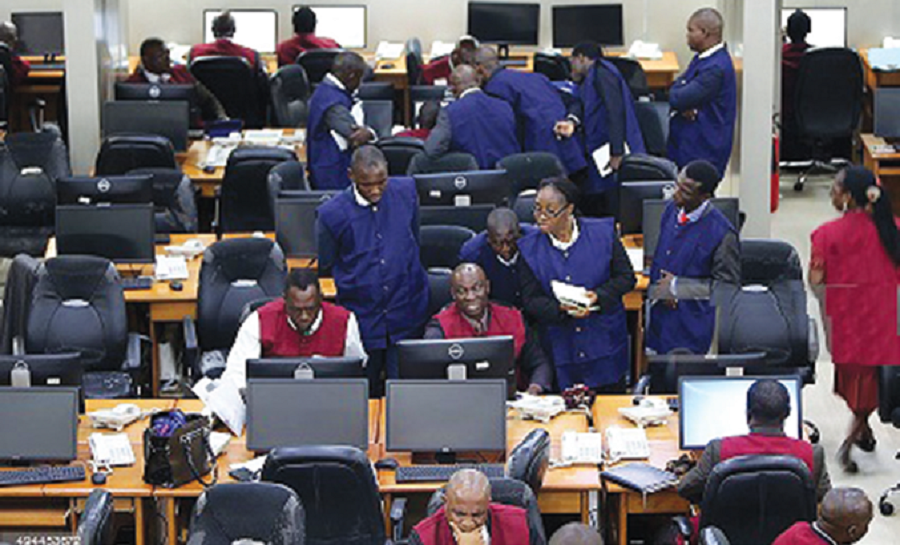
The Nigerian major stock market, also known as the NGX, is experiencing a historic and unprecedented bull run.
Other News
The benchmark NGX All-Share Index (ASI) has maintained its upward trajectory, trading between 249,000 and 252,000 after surging past the historic 200,000-point milestone in March.
The local bourse has delivered an incredible 62 percent this year (YTD), solidifying its standing as one of the world’s top-performing equity markets.
It is the second-best portfolio in return globally when measured in dollars, quickly recovering billions of dollars in market value lost to currency devaluations.
The macro and corporate fundamentals underpinning this rally indicate a structural re-rating of Nigerian stocks.
The expensive fuel subsidies and the past foreign exchange regime that had caused the Nigerian naira to become overpriced and discouraged investors were removed as part of the Federal government’s reset of the Nigerian economy.
According to the International Monetary Fund, economic growth will increase to 4.1 percent this year from 3.3 percent when Tinubu took office three years ago. Moody’s Ratings and Fitch Global Ratings upgraded Nigeria’s credit rating in 2025. Nigerian stock traders are returning to the country’s capital markets amid improved macroeconomic policies.
Consequently, the increase in oil prices since the beginning of the Iran war has provided a budget windfall since the country depends on crude exports for roughly one-third of its government revenue.
Aradel Holdings, for instance, has benefited from strong trading value on the back of local energy assets and stable pricing mechanisms. Foreign portfolio investment (FPI) has bounced back to multi-year highs; however, the real engine has been domestic institutional liquidity, as Pension Fund Administrators (PFAs) have aggressively increased their equity asset exposure to create deep liquidity buffers.
The market remains essentially cheap despite the sharp increase in share prices from a technical perspective
Compared with peers in emerging and frontier markets, such as Egypt (8.47x) and South Africa (16.28x), the NGX ASI started the year trading at a trailing Price-to-Earnings (P/E) ratio of just 6.92x, lower than its 5-year average of 10.65x. This valuation gap serves as a significant safety net for incoming capital.
BUA Cement and Lafarge Africa (WAPCO) are among the companies with aggressive institutional accumulation. Inflation is cooling, and the Nigerian naira is stabilizing, easing cost pressures for companies and allowing corporate earnings-per-share (EPS) to maintain bullish momentum.
Nigerian stocks have transitioned from a parabolic breakout phase to a constructive high-level consolidation pattern. After breaking through the 200,000 psychological barriers, the index immediately focused on 250,000, recently hitting a daily closing high.
Latest price action highlighted that the 14-day RSI was overbought at an average level of 75 for much of Q1, before cooling during the current mid-May consolidation, unwinding extreme momentum without breaking the underlying macro uptrend.
Recent sessions have displayed a pronounced volume fade (down 34% in daily volume and down 55% in turnover on a bearish cycle); for example, volume contracted to around 1.04 billion shares on recent mixed sessions traded at N41.5 billion.
This classic divergence suggests that sellers are tapped out; the drop is a temporary pause in buying momentum, not a sign of active selling major funds. Market breadth remains very constructive (gainers often outnumber losers by more than a 2:1 margin).
Short-term volatility and localized profit-taking should be expected, with a 61% YTD cushion, but the long-term technical trajectory remains overwhelmingly bullish. More of this earnings growth is expected to be driven by concrete corporate earnings.