The Chairman of Nigerian Exchange Group, Alhaji Umaru Kwairanga, has called on African capital markets and financial institutions to expand beyond traditional industries such as oil, banking and manufacturing by embracing the continent’s fast-growing creative and innovation economy as a viable investment asset class.
Other News
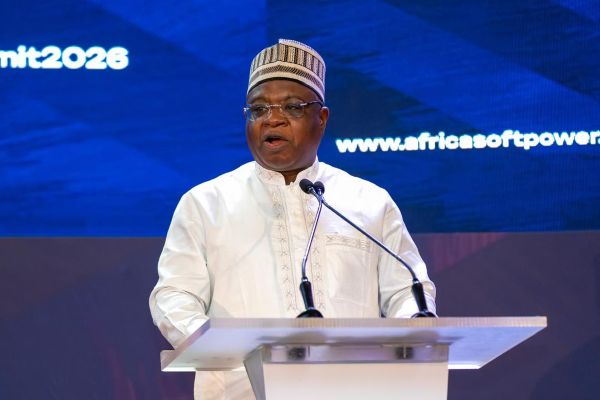
Kwairanga made the call during his opening remarks at the Africa Soft Power Summit held on Thursday in Nairobi, where policymakers, investors, creatives, entrepreneurs and business leaders gathered to discuss Africa’s cultural, technological and economic future.
The summit, convened by the Africa Soft Power Group, focuses on strengthening the intersection between Africa’s creative industries, technology ecosystem and capital markets, while exploring how the continent can convert its growing global cultural influence into sustainable economic value.
What Umaru Kwairanga is saying
Speaking during the event, Kwairanga said Africa’s booming music, film and innovation industries present significant investment opportunities that remain largely underdeveloped despite their growing global popularity.
According to him, Africa’s creative economy should no longer be treated as a cultural side note but as a serious economic sector capable of generating sustainable returns for investors and long-term value for economies across the continent.
- “Given the increasing popularity of our arts, our music and our movies, African financial institutions need to take the creative and innovation economy seriously as an asset class rather than just a cultural footnote,” he said.
Kwairanga noted that although some African artists are beginning to enjoy international recognition and financial success, many creative sectors across the continent still lack proper monetisation structures, financing systems and value chains capable of rewarding all participants.
- “Are artists such as Tyla, Burna Boy or Diamond Platnumz fully exploiting the benefits derivable from branding, copyrights, ticket and concert revenues and so forth? Is there a value chain in Nollywood or the East African movie industry that properly rewards the thousands who in one way or the other contribute to the light that our creative artists radiate?” he asked.
He also questioned how Africa could replicate the success of companies such as Safaricom across the continent’s growing technology hubs without stronger financing systems and institutional support.
More insights
Kwairanga further stressed that African exchanges and financial institutions must evolve in line with changing economic realities by supporting innovation-driven businesses and helping them scale sustainably.
According to him, the future of African capital markets depends on their ability to support sectors driven by intellectual property, digital enterprise, artificial intelligence, creators and technology entrepreneurs.
He explained that the NGX already recognises the importance of adapting to the continent’s evolving economic structure.
- “As Africa’s economies become increasingly driven by innovation, digital enterprise, intellectual property, and creative talent, our role is not only to provide platforms for capital formation, but to help build the ecosystem that allows these sectors to scale sustainably,” he said.
Kwairanga added that future exchanges across Africa must broaden their focus beyond traditional industries and connect more directly with the continent’s emerging generation of creators and innovators.
- “We believe the Exchange of the future must be connected not just to traditional industries, but also to the ideas, creators, entrepreneurs, and technology-driven businesses shaping Africa’s next chapter of growth,” he stated.
He added that discussions at the summit would also cover issues around AI and data ownership, diaspora capital, creator economics and broader investment opportunities within Africa’s innovation ecosystem.
What you should know
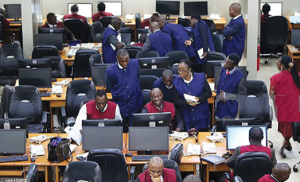
Kwairanga’s call for African capital markets to embrace the creative and innovation economy comes at a time when the Nigerian Exchange Group itself has been pushing reforms aimed at deepening investor participation and expanding activity within Nigeria’s capital market.
- As part of those efforts, the Nigerian Exchange Limited recently extended its daily trading hours to 4:00 p.m., with effect from April 27, 2026, while also moving the market opening time earlier to 9:00 a.m. from 9:30 a.m. The reform significantly expanded the trading window for investors and market participants.
The Group has also continued to record strong financial performance amid rising activity across the Exchange.
- NGX Group reported a pre-tax profit of N5.98 billion in Q1 2026, representing a 140.5% increase compared to the N2.49 billion posted during the corresponding period of 2025.
Its revenue also rose by 102.5% to N7.22 billion from N3.56 billion in Q1 2025, driven largely by higher transaction fees and stronger trading activity across the market.