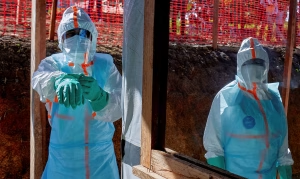
The United Nations Office for the Coordination of Humanitarian Affairs has allocated up to $60 million from its emergency response fund to support efforts aimed at containing the ongoing Ebola outbreak linked to the rare Bundibugyo virus strain in Central Africa.
Other News
This was disclosed on Friday, May 22, 2026, by Tom Fletcher, the UN Under-Secretary-General for Humanitarian Affairs and Emergency Relief Coordinator, in a post shared on X.
The emergency allocation comes five days after the World Health Organization declared the outbreak a Public Health Emergency of International Concern (PHEIC), warning that there is currently no approved vaccine or specific treatment for the Bundibugyo strain spreading across parts of Central Africa.
What they are saying
Fletcher said the UN was moving quickly to stay ahead of the outbreak and strengthen containment efforts across affected countries.
- “We need to get ahead of this Ebola outbreak. I am allocating up to $60 million from the United Nations Central Emergency Response Fund to accelerate the response in the Democratic Republic of the Congo and the wider region,” he said.
He added that beyond the financial support, additional personnel from UN agencies and humanitarian partners were being deployed to reinforce response operations in the Democratic Republic of the Congo, Uganda and South Sudan. Fletcher also commended local communities and frontline humanitarian workers involved in efforts to contain the outbreak.
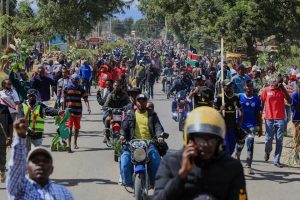
The UN humanitarian chief further noted that the response operation was being carried out in difficult conditions marked by armed conflict and heavy population movement, factors he said could complicate containment efforts.
According to him, humanitarian agencies are working to secure safe and uninterrupted access for frontline responders, including in areas controlled by armed groups.
- “We are applying lessons from previous outbreaks. Containment depends on fast, coordinated action at community level. We need strong communication with governments, and effective early warning and detection systems. Community trust is essential,” Fletcher said.
Get up to speed
On May 17, the World Health Organization declared the ongoing Ebola outbreak linked to the rare Bundibugyo virus strain a global health emergency after confirmed infections were recorded in Ituri Province in the Democratic Republic of the Congo before spreading to Kampala, Uganda’s capital city, through infected travellers arriving from DR Congo.
At the time of the declaration, health authorities had reported eight laboratory-confirmed cases, 246 suspected infections and 80 suspected deaths across at least three health zones in Ituri Province, including Bunia, Rwampara and Mongbwalu.
However, current figures released by health authorities show that the outbreak has now resulted in about 160 suspected deaths from more than 670 suspected cases.
What you should know
The Bundibugyo strain currently driving the outbreak does not yet have an approved vaccine or targeted treatment.
- Bundibugyo ebolavirus is considered one of the rarest Ebola species known to infect humans and has only been linked to two previous outbreaks — first in Uganda in 2007 and later in eastern DR Congo in 2012.
- Most of the Ebola vaccines and antibody treatments available today were designed specifically for the more widespread and deadlier Zaire Ebola strain, which caused the 2014–2016 West African Ebola epidemic that killed more than 11,000 people.
The Democratic Republic of the Congo has experienced more than a dozen Ebola outbreaks over the past 50 years and is regarded globally as one of the most experienced countries in Ebola surveillance, containment and emergency response operations.