The Midstream and Downstream Gas Infrastructure Fund (MDGIF) said it has committed over N430 billion to gas infrastructure across Nigeria, amid President Bola Tinubu’s commissioning of four flagship Compressed Natural Gas (CNG) projects on Friday.
Other News
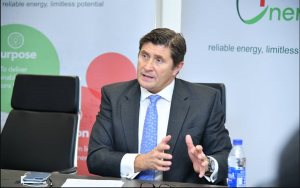
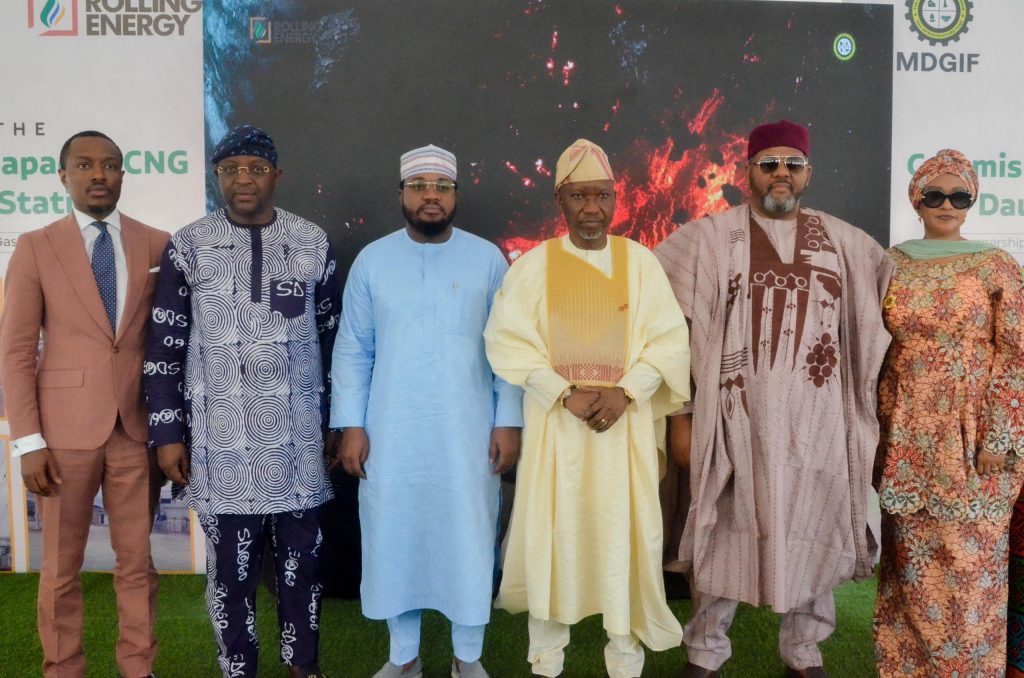
The Executive Director of the MDGIF, Mr. Oluwole Adama, disclosed this on Friday during a press interview attended by Nairametrics on the sidelines of the official commissioning of the Rolling Energy High-Capacity CNG Station by President Bola Tinubu.
Recall that the Nigerian Midstream and Downstream Petroleum Regulatory Authority (NMDPRA) had, in November 2025, revealed that the MDGIF had committed over N287 billion to gas infrastructure development across the country.
What they are saying
Highlighting energy projects among over twenty strategic projects in energy, health, enterprise, education, and public works commissioned on Friday, President Tinubu stated that under the Midstream and Downstream Gas Infrastructure Fund, four flagship projects were commissioned nationwide.
- “FEMADEC Energy at the Federal University of Technology, Owerri — the first of twenty CNG refuelling stations in our federal universities; Portland Gas at Ojota, Lagos — a 96,000 SCMD CNG mother station, with a daughter station in Kubwa, Abuja; Ibile Oil and Gas, with its network of fifteen CNG refuelling stations across Lagos State; and Rolling Energy at Jahi, Abuja — anchoring a portfolio of seventeen RLNG and LCNG facilities across Kaduna, Kano, and Borno,” the President listed.
He maintained that together, these projects will lower transport costs, expand cleaner energy adoption, and strengthen Nigeria’s energy sovereignty.
More insights
Representing Adama, Hussaini Basaka, Director-in-Charge of Project Management at MDGIF, told the press about the monetary implications of the CNG projects.
- “So, in ballpark terms, the MDGIF has invested over N430 billion and catalyzed about ten times that amount — about N1.6 trillion in investments.”
He added that for this particular project in Abuja, MDGIF has taken a 45% stake by investing a substantial amount of money.
He explained that the development consists of 18 facilities: three mother stations, seven daughter stations, and eight LNG downloading stations designed to serve industrial customers.
He added that MDGIF has continued investing in gas infrastructure projects.
- “So far, we have invested in 31 gas infrastructure projects, comprising 125 gas infrastructure facilities. About 10 of those have been commissioned, while many are at different stages of completion,” he added.
He said the government remains committed to addressing last-mile consumption points, particularly refill stations.
On his part, the Executive Chairman of the Presidential Compressed Natural Gas Initiative (PCNGI), Barrister Ismaeel Ahmed, told the press that the ongoing gas projects cannot be described as a political uptick when “the private sector has invested $2 billion and counting from its own funding.”
He stressed that the development is not solely government-funded but also heavily backed by private sector investment.
- “Government has invested more than N400 billion of its own funding,” he added.
He explained that gas infrastructure development takes time because people are accustomed to a particular form of energy.
The Senior Special Assistant (SSA) to President Bola Ahmed Tinubu on Digital/New Media, O’tega Ogra, highlighted that the commissioned projects include four projects in the energy sector, eight in education, another eight in healthcare, alongside several infrastructure and public works projects.
He stated that the CNG projects originated from President Tinubu’s initiative aimed at curbing the excesses of the fuel subsidy regime while reducing wastage in government spending.
He added that the President has observed that many Nigerians want to convert to CNG but do not know how to go about it.
- “So, to ensure that more Nigerians can convert, currently, as we speak, you can go through Moniepoint and CreditCorp to get a loan at a discounted rate to convert your motor vehicles, tricycles, lorries, or trucks to CNG, and repay over a long period of time.”
He said this is aimed at ensuring wider adoption of the CNG revolution as the government continues building infrastructure in partnership with the private sector across the value chain.
What you should know
The Presidential Compressed Natural Gas Initiative (PCNGi), which disclosed this, stated that the initiative was aimed at easing energy and transportation costs in Nigeria.
The Federal Government maintained that the development was intended to boost gas mobility while demonstrating its commitment to sustainable energy solutions and providing financial relief to citizens.