 Follow Us on Google Discover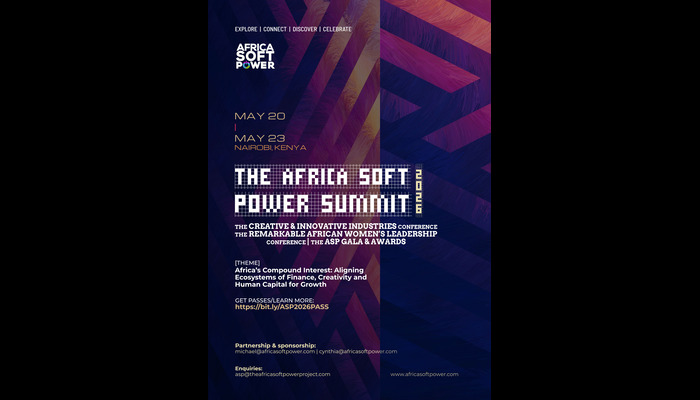
With leaders from Google, NGX Group, Safaricom, Microsoft and EBRD, and partners including Dye Lab, BellaNaija and Zuri Health, ASP Summit 2026 will examine how Africa’s creative, digital and cultural influence can be converted into ownership, investment and durable economic value.
The Africa Soft Power Summit returns to Nairobi, Kenya, from 20 to 23 May 2026, with curated city and destination experiences continuing through 24 May. The Summit will convene leaders across finance, policy, technology, media, culture, enterprise, investment and women’s leadership for a cross-sector examination of Africa’s next growth cycle.
Now in its seventh edition, the Summit has become a platform for organising one of the continent’s most urgent economic conversations: how Africa’s cultural and creative capital connects with investment, innovation, policy and long-term market power. Its 2026 theme, “Africa’s Compound Interest: Aligning Ecosystems of Finance, Creativity and Human Capital for Growth,” advances a clear proposition. Africa’s next advantage will be shaped by the compounding effect created when creativity, capital, innovation and inclusion reinforce one another.
At a time when African creativity travels globally through music, film, fashion, design, technology, media and digital communities, ASP Summit is placing a sharper economic question at the centre of the conversation: who owns the value, who finances the scale, who shapes the markets, and who benefits from Africa’s rising influence?
The 2026 programme is built around three interconnected pillars: Innovation & Creativity, Money & Markets, and Inclusion & Power. Together, they examine how African ideas, brands, technologies and cultural industries shape demand and competitive advantage; how finance, policy, platforms, diaspora capital and institutional investment can convert influence into durable economic value; and how market access, women-led enterprise, governance, participation and consumer power determine who builds, earns, owns and leads.
For business leaders, investors, founders, policymakers and creators, this framing moves Africa’s soft power into the realm of economic infrastructure. Cultural influence, technology, finance and human capital are being treated as connected systems capable of shaping Africa’s next growth cycle. That is the intellectual ground ASP Summit 2026 is claiming in Nairobi.
“Africa’s cultural and innovation economy already shapes global demand. The next task is to build the capital pathways, ownership structures and institutional support that allow more of that value to compound on the continent,” said Dr Nkiru Balonwu, Founder and Creative Director of the Africa Soft Power Group. “Nairobi is a fitting setting for that conversation because it reflects the connectivity, enterprise and ambition shaping Africa’s next growth cycle.”
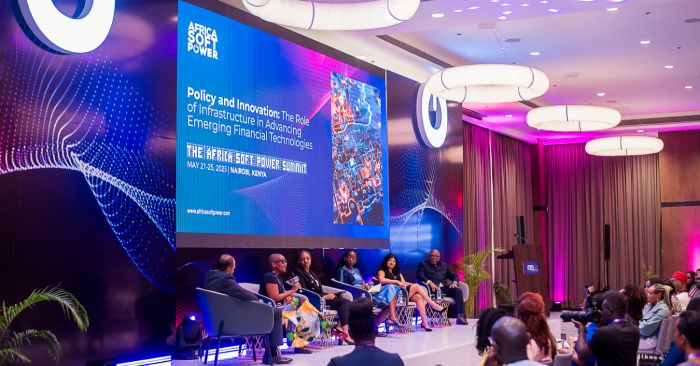
The Summit will open on Wednesday, 20 May, with an intimate gathering of ecosystem leaders before moving into two full days of high-level conversations. Thursday, 21 May, will focus on Inclusion & Power, examining leadership, participation, women’s economic influence, enterprise, market access and the systems that determine how opportunity is distributed. Friday, 22 May, will centre on Innovation & Creativity Meets Capital, exploring how Africa’s technological, cultural and creative influence becomes investable value. The programme will culminate in the ASP Gala & Awards on Saturday, 23 May, followed by curated Nairobi experiences extending into 24 May.
The commercial edge of the programme is clear in sessions examining women’s leadership as economic infrastructure, the female economy, beauty and wellness value chains, AI and data ownership, diaspora capital, creator economics and the institutions shaping Africa’s next investment agenda. Sessions include “Designing Power: Women’s Leadership as Economic Infrastructure,” “The Female Economy: Africa’s Most Undervalued Growth Engine,” “The AI Scramble: Who Owns Africa’s Data, Talent and Digital Future?” and “Soft Power & Capital: Who Shapes Africa’s Investment Agenda?”
This year’s partnerships extend ASP Summit’s mandate by treating culture, technology, media and human capital as infrastructure for how value is created, interpreted and scaled.
Among the partners and featured platforms for the 2026 edition is Dye Lab, unveiled as the Summit’s Culture Shifter Spotlight Brand. ASP Summit is positioning Dye Lab as one of Africa’s most distinctive fashion businesses within a continental conversation on the female economy, cultural commerce, production discipline, supply chains and the global value of African taste.
Through an exclusive evening themed “Scaling Culture into Global Growth,” the Summit will examine how locally rooted creativity acquires commercial momentum, investment relevance and international brand power. The programme will feature a fireside conversation with Dye Lab founder Rukky Ladoja, followed by an immersive encounter with the brand’s latest collection, its design intelligence, production discipline and storytelling. The format reflects a wider ASP principle: African culture gains economic force when it is connected to the systems that help it scale, from market access and consumer insight to investment, operations and distribution.
Dye Lab’s inclusion is significant because African fashion is often admired for its craft, colour and cultural memory while the business infrastructure behind it receives less serious attention. The next stage of growth for the sector will depend on more than global applause. It will depend on stronger production systems, retail models, export readiness, financing pathways, intellectual property protection and the ability to build brands that retain cultural depth while commanding commercial scale. ASP Summit is placing that discussion within a broader agenda on ownership and value creation.
BellaNaija joins ASP Summit 2026 as a narrative partner with deep authority in interpreting modern African aspiration, from fashion, weddings, beauty and entertainment to
entrepreneurship, lifestyle, family, ambition and public life. In markets where cultural behaviour often moves faster than formal data, BellaNaija’s editorial and audience intelligence helps explain how African consumption, identity and influence evolve.
Within the ASP platform, that cultural knowledge connects to a wider economic conversation about demand formation, media infrastructure and the commercial power of storytelling. Cultural media does more than report taste. It shapes it. It influences what gains visibility, which brands earn trust, how new lifestyles become legible, and how communities interpret ambition, success and modern African identity. For a continent seeking to convert influence into enterprise, that kind of narrative infrastructure matters.
Zuri Health extends the Summit’s infrastructure thesis into health technology and human capital. Its inclusion reflects the role of locally built digital systems in widening access, improving market efficiency and strengthening the productivity foundations that sustainable growth requires. In a continent where human capital outcomes influence the trajectory of enterprise, labour markets and economic resilience, health innovation belongs inside the wider conversation on Africa’s long-term value creation.
Confirmed speakers for the 2026 edition reflect the Summit’s cross-sector ambition, bringing together leaders from technology, finance, policy, media, enterprise, culture and creative industries. Speakers include Alex Okosi, Managing Director, Africa, Google; Esther Masese Waititu, Chief Financial Services Officer, Safaricom; Catherine Muraga, Managing Director, Microsoft Africa Development Center; Heike Harmgart, Managing Director for Sub-Saharan Africa, EBRD; Snehar Shah, CEO, iXAfrica Data Centres; Ralph Opara, Country MD/CEO, Access Bank Kenya PLC; Rita Dominic, Co-Founder, The Audrey Silva Company; Bolanle Austen-Peters, Founder and Artistic Director, BAP Productions; and Rukky Ladoja, Founder and Creative Strategist, Dye Lab, among others.
Previous ASP convenings have brought together voices from organisations including Netflix, Meta, Mastercard, Google, MTN, NBA, Apple, NFL, Safaricom, Amazon Studios, Afreximbank, IFC, Bank of Industry, AfCFTA and NGX Group, alongside former heads of state, ministers, founders, media leaders and cultural figures from across Africa and beyond.
For Nigerian founders, investors, policymakers and corporate leaders, the Summit’s relevance is particularly direct. Nigeria already sits at the centre of several sectors driving Africa’s global visibility, from fintech and music to film, fashion, media, banking, consumer markets and digital entrepreneurship. The challenge is no longer whether Nigerian and African ideas can command attention. The strategic question is whether that attention can be converted into ownership, infrastructure, policy influence, investment readiness and durable market value. That is the agenda ASP Summit 2026 is convening around.
Nairobi is central to that proposition. As host city, it represents one of Africa’s most dynamic intersections of mobile money, regional enterprise, digital innovation, conservation, tourism,
culture, capital and policy relevance. The wider programme makes Nairobi part of the Summit’s proposition, with curated cultural and destination experiences designed to carry the agenda into the city’s creative, conservation and enterprise landscapes.
For Nigerian founders, executives, investors and policymakers, ASP Summit 2026 offers a structured opportunity to engage the wider continent from a position of substance. Registration and enquiries are available through the Africa Soft Power Summit 2026 registration page http://www.theafricasoftpowerproject.com/africa-soft-power-summit-2026
About Africa Soft Power Summit
The Africa Soft Power Summit is a high-level pan-African convening focused on the intersection of creative and tech industries, women’s leadership, policy, capital and culture. Now in its seventh edition, it has grown into an influential in-person platform designed to generate cross-sector insight, stronger partnerships and Africa-led perspectives on global challenges and opportunities.
Other News
With leaders from Google, NGX Group, Safaricom, Microsoft and EBRD, and partners including Dye Lab, BellaNaija and Zuri Health, ASP Summit 2026 will examine how Africa’s creative, digital and cultural influence can be converted into ownership, investment and durable economic value.
The Africa Soft Power Summit returns to Nairobi, Kenya, from 20 to 23 May 2026, with curated city and destination experiences continuing through 24 May. The Summit will convene leaders across finance, policy, technology, media, culture, enterprise, investment and women’s leadership for a cross-sector examination of Africa’s next growth cycle.
Now in its seventh edition, the Summit has become a platform for organising one of the continent’s most urgent economic conversations: how Africa’s cultural and creative capital connects with investment, innovation, policy and long-term market power. Its 2026 theme, “Africa’s Compound Interest: Aligning Ecosystems of Finance, Creativity and Human Capital for Growth,” advances a clear proposition. Africa’s next advantage will be shaped by the compounding effect created when creativity, capital, innovation and inclusion reinforce one another.
At a time when African creativity travels globally through music, film, fashion, design, technology, media and digital communities, ASP Summit is placing a sharper economic question at the centre of the conversation: who owns the value, who finances the scale, who shapes the markets, and who benefits from Africa’s rising influence?
The 2026 programme is built around three interconnected pillars: Innovation & Creativity, Money & Markets, and Inclusion & Power. Together, they examine how African ideas, brands, technologies and cultural industries shape demand and competitive advantage; how finance, policy, platforms, diaspora capital and institutional investment can convert influence into durable economic value; and how market access, women-led enterprise, governance, participation and consumer power determine who builds, earns, owns and leads.
For business leaders, investors, founders, policymakers and creators, this framing moves Africa’s soft power into the realm of economic infrastructure. Cultural influence, technology, finance and human capital are being treated as connected systems capable of shaping Africa’s next growth cycle. That is the intellectual ground ASP Summit 2026 is claiming in Nairobi.
“Africa’s cultural and innovation economy already shapes global demand. The next task is to build the capital pathways, ownership structures and institutional support that allow more of that value to compound on the continent,” said Dr Nkiru Balonwu, Founder and Creative Director of the Africa Soft Power Group. “Nairobi is a fitting setting for that conversation because it reflects the connectivity, enterprise and ambition shaping Africa’s next growth cycle.”
The Summit will open on Wednesday, 20 May, with an intimate gathering of ecosystem leaders before moving into two full days of high-level conversations. Thursday, 21 May, will focus on Inclusion & Power, examining leadership, participation, women’s economic influence, enterprise, market access and the systems that determine how opportunity is distributed. Friday, 22 May, will centre on Innovation & Creativity Meets Capital, exploring how Africa’s technological, cultural and creative influence becomes investable value. The programme will culminate in the ASP Gala & Awards on Saturday, 23 May, followed by curated Nairobi experiences extending into 24 May.
The commercial edge of the programme is clear in sessions examining women’s leadership as economic infrastructure, the female economy, beauty and wellness value chains, AI and data ownership, diaspora capital, creator economics and the institutions shaping Africa’s next investment agenda. Sessions include “Designing Power: Women’s Leadership as Economic Infrastructure,” “The Female Economy: Africa’s Most Undervalued Growth Engine,” “The AI Scramble: Who Owns Africa’s Data, Talent and Digital Future?” and “Soft Power & Capital: Who Shapes Africa’s Investment Agenda?”
This year’s partnerships extend ASP Summit’s mandate by treating culture, technology, media and human capital as infrastructure for how value is created, interpreted and scaled.
Among the partners and featured platforms for the 2026 edition is Dye Lab, unveiled as the Summit’s Culture Shifter Spotlight Brand. ASP Summit is positioning Dye Lab as one of Africa’s most distinctive fashion businesses within a continental conversation on the female economy, cultural commerce, production discipline, supply chains and the global value of African taste.
Through an exclusive evening themed “Scaling Culture into Global Growth,” the Summit will examine how locally rooted creativity acquires commercial momentum, investment relevance and international brand power. The programme will feature a fireside conversation with Dye Lab founder Rukky Ladoja, followed by an immersive encounter with the brand’s latest collection, its design intelligence, production discipline and storytelling. The format reflects a wider ASP principle: African culture gains economic force when it is connected to the systems that help it scale, from market access and consumer insight to investment, operations and distribution.
Dye Lab’s inclusion is significant because African fashion is often admired for its craft, colour and cultural memory while the business infrastructure behind it receives less serious attention. The next stage of growth for the sector will depend on more than global applause. It will depend on stronger production systems, retail models, export readiness, financing pathways, intellectual property protection and the ability to build brands that retain cultural depth while commanding commercial scale. ASP Summit is placing that discussion within a broader agenda on ownership and value creation.
BellaNaija joins ASP Summit 2026 as a narrative partner with deep authority in interpreting modern African aspiration, from fashion, weddings, beauty and entertainment to
entrepreneurship, lifestyle, family, ambition and public life. In markets where cultural behaviour often moves faster than formal data, BellaNaija’s editorial and audience intelligence helps explain how African consumption, identity and influence evolve.
Within the ASP platform, that cultural knowledge connects to a wider economic conversation about demand formation, media infrastructure and the commercial power of storytelling. Cultural media does more than report taste. It shapes it. It influences what gains visibility, which brands earn trust, how new lifestyles become legible, and how communities interpret ambition, success and modern African identity. For a continent seeking to convert influence into enterprise, that kind of narrative infrastructure matters.
Zuri Health extends the Summit’s infrastructure thesis into health technology and human capital. Its inclusion reflects the role of locally built digital systems in widening access, improving market efficiency and strengthening the productivity foundations that sustainable growth requires. In a continent where human capital outcomes influence the trajectory of enterprise, labour markets and economic resilience, health innovation belongs inside the wider conversation on Africa’s long-term value creation.
Confirmed speakers for the 2026 edition reflect the Summit’s cross-sector ambition, bringing together leaders from technology, finance, policy, media, enterprise, culture and creative industries. Speakers include Alex Okosi, Managing Director, Africa, Google; Esther Masese Waititu, Chief Financial Services Officer, Safaricom; Catherine Muraga, Managing Director, Microsoft Africa Development Center; Heike Harmgart, Managing Director for Sub-Saharan Africa, EBRD; Snehar Shah, CEO, iXAfrica Data Centres; Ralph Opara, Country MD/CEO, Access Bank Kenya PLC; Rita Dominic, Co-Founder, The Audrey Silva Company; Bolanle Austen-Peters, Founder and Artistic Director, BAP Productions; and Rukky Ladoja, Founder and Creative Strategist, Dye Lab, among others.
Previous ASP convenings have brought together voices from organisations including Netflix, Meta, Mastercard, Google, MTN, NBA, Apple, NFL, Safaricom, Amazon Studios, Afreximbank, IFC, Bank of Industry, AfCFTA and NGX Group, alongside former heads of state, ministers, founders, media leaders and cultural figures from across Africa and beyond.
For Nigerian founders, investors, policymakers and corporate leaders, the Summit’s relevance is particularly direct. Nigeria already sits at the centre of several sectors driving Africa’s global visibility, from fintech and music to film, fashion, media, banking, consumer markets and digital entrepreneurship. The challenge is no longer whether Nigerian and African ideas can command attention. The strategic question is whether that attention can be converted into ownership, infrastructure, policy influence, investment readiness and durable market value. That is the agenda ASP Summit 2026 is convening around.
Nairobi is central to that proposition. As host city, it represents one of Africa’s most dynamic intersections of mobile money, regional enterprise, digital innovation, conservation, tourism,
culture, capital and policy relevance. The wider programme makes Nairobi part of the Summit’s proposition, with curated cultural and destination experiences designed to carry the agenda into the city’s creative, conservation and enterprise landscapes.
For Nigerian founders, executives, investors and policymakers, ASP Summit 2026 offers a structured opportunity to engage the wider continent from a position of substance. Registration and enquiries are available through the Africa Soft Power Summit 2026 registration page http://www.theafricasoftpowerproject.com/africa-soft-power-summit-2026
About Africa Soft Power Summit
The Africa Soft Power Summit is a high-level pan-African convening focused on the intersection of creative and tech industries, women’s leadership, policy, capital and culture. Now in its seventh edition, it has grown into an influential in-person platform designed to generate cross-sector insight, stronger partnerships and Africa-led perspectives on global challenges and opportunities.