Nigeria’s banking sector extends credit to the private sector equivalent to just 9.4% of the country’s Gross Domestic Product, highlighting the limited role of financial institutions in supporting business expansion despite ongoing reforms aimed at deepening financial inclusion and economic growth.
Other News
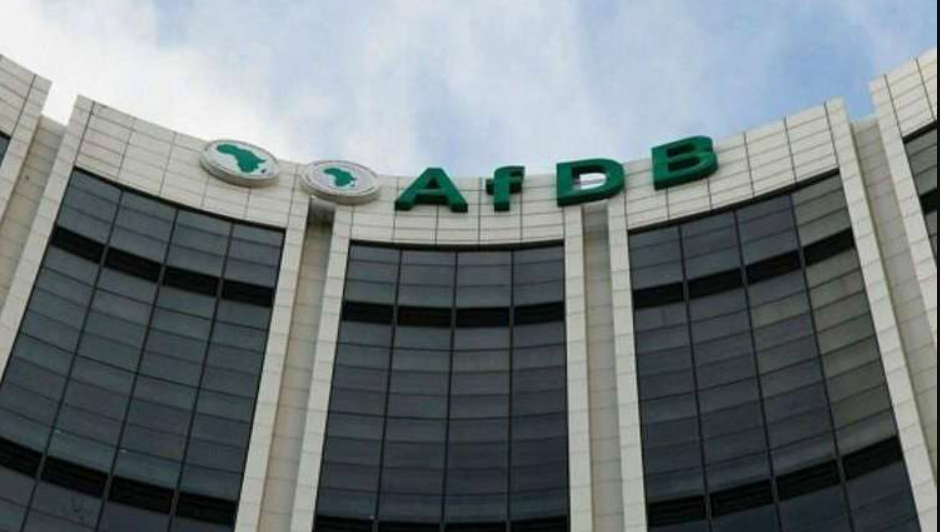
This was disclosed in the African Development Bank’s 2026 African Economic Outlook report, which identified shallow financial markets as one of the major constraints to mobilising development finance in Africa’s largest economy.
The report noted that Nigeria continues to face significant financing challenges as domestic revenue mobilisation remains weak, the informal economy remains large, and the financial system lacks the depth required to channel adequate capital to productive sectors of the economy.
What the report says
According to the AfDB, Nigeria’s private sector credit-to-GDP ratio of 9.4% is significantly below levels seen in many emerging and developing economies, reflecting the limited ability of businesses to access formal financing.
The bank observed that Africa as a whole lags other regions in private sector lending, with domestic credit to businesses constrained by weak savings mobilisation, underdeveloped financial markets and regulatory bottlenecks.
- The report read, “Most of Africa’s bank lending is concentrated in short-term and lowrisk asset classes, and little in long-term projects with high development impacts. At 34.6% of GDP in 2020–2024, Africa’s domestic credit to the private sector is the lowest globally, having declined in the last 10 years.
- “South Asia and Latin American and the Caribbean have credit to the private sector of more than 50% of GDP. Major African economies such as Kenya (31.6%), Egypt (28.3%), Côte d’Ivoire (21.4%), and Nigeria (9.4%) remain well below comparable emerging lowermiddle-income market economies such as Vietnam (121.6%), Malaysia (121.5%), and Chile (111.8%).”
It explained that weak collateral enforcement mechanisms, lengthy judicial processes and stringent prudential requirements continue to increase perceived lending risks, causing financial institutions to ration credit and concentrate lending on lower-risk borrowers.
The report further noted that banks across the continent remain major holders of government securities, a trend that limits the volume of funds available for lending to businesses and productive sectors.
Shallow financial markets constrain investment
Beyond bank lending, the AfDB said Nigeria’s broader financial system remains underdeveloped.
According to the report, stock market capitalisation averaged just 11.8% of GDP between 2020 and 2024, making Nigeria one of the countries with the lowest market capitalisation ratios on the continent.
The bank added that structural rigidities, including high cross-border payment costs and limited market depth, continue to discourage productive capital inflows and long-term investment.
- “Currently, the financial system remains shallow,” the report stated, warning that external financing inflows are growing but remain insufficient to meet the country’s development financing needs.
The AfDB also pointed to insecurity and other domestic bottlenecks as factors undermining investor confidence and limiting Nigeria’s ability to attract larger volumes of private capital.
AfDB pushes alternative financing options
To address the financing gap, the AfDB urged Nigeria to deepen its domestic financial markets and expand the use of alternative funding instruments.
The report recommended greater deployment of green bonds, public-private partnerships, blended finance structures and debt-for-development swaps as part of efforts to diversify financing sources and reduce dependence on traditional bank credit.
It also called for stronger collaboration with development finance institutions to improve domestic revenue mobilisation and enhance the efficiency of resource deployment.
According to the bank, strengthening financial markets and improving capital mobilisation mechanisms will be critical to financing infrastructure development, supporting businesses and sustaining economic growth.
The report noted that Africa’s fragmented and shallow financial systems continue to limit the mobilisation of domestic savings and their allocation to productive investment.
What you should know
Nairametrics earlier reported that Nigeria’s private sector credit declined sharply by over N14 trillion within two months, falling to N80.59 trillion in April 2026 from a 12-month high of N94.61 trillion recorded in February 2026, despite the Central Bank of Nigeria’s (CBN) earlier decision to ease monetary policy.
The figures highlight continued weaknesses in lending to productive sectors of the economy, even as monetary authorities attempt to balance inflation control with economic growth support through cautious policy adjustments.