 Follow Us on Google Discover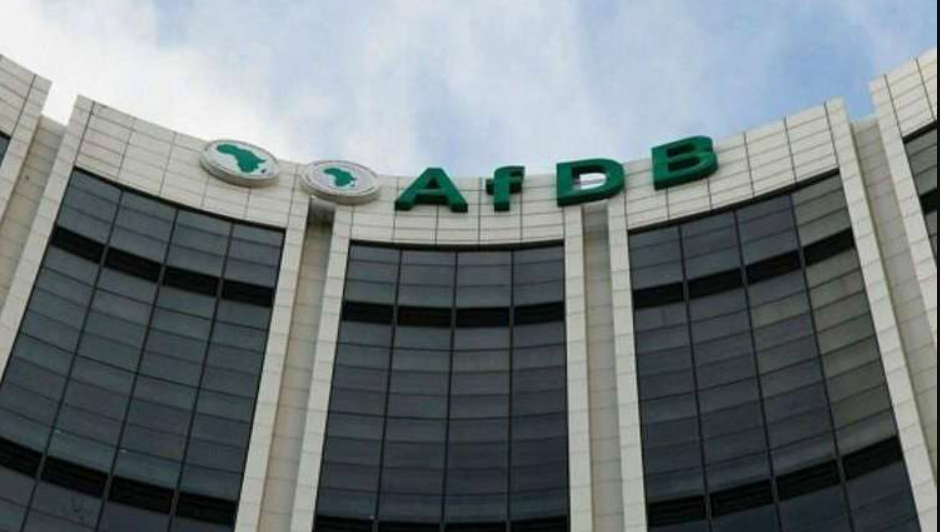
…North-East tops development beneficiaries; 20 states lack visible projects
The African Development Bank’s (AfDB) Nigeria portfolio is the single largest country allocation on the African continent, valued at US $6.2 billion — approximately N9.13 trillion at the December 2025 exchange rate of N1,473 to the dollar.
Yet despite covering all 36 states and the Federal Capital Territory, the bank’s 2025 Country Portfolio Performance Review (CPPR), released in March 2026, reveals a striking geographic imbalance in project spread.
With an overall disbursement rate of 53% — representing approximately US $3.3 billion (N4.84 trillion) of the US $6.2 billion committed across 53 operations, a handful of states are home to multiple active, well-disbursed projects.
Also Read
Conversely, more than 20 states rely entirely on national or federal-level programmes, with no clearly named state project and visible implementation progress, raising questions about equity and fairness in execution.
The CPPR’s own assessment found that the share of flagged operations fell from 42% of the portfolio in January 2025 to 25% in December 2025, reflecting improved monitoring and oversight.
However, several projects remain at zero disbursement, at least four are rated problematic or potentially problematic, and three are classified as ageing — meaning they are active but overdue for intensified delivery. AfDB Nigeria Director General, Abdul Kamara, did not respond to enquiries more than a week after.
Here is a state-by-state and regional breakdown of where the AfDB’s Nigeria portfolio stands, and which areas have benefited most and least.
North-East — The largest identifiable regional beneficiary
- States covered: Adamawa, Bauchi, Borno, Gombe, Taraba, Yobe
The North-East carries the most concentrated and visible direct development impact in the entire portfolio, driven primarily by the Inclusive Basic Service Delivery and Livelihood Empowerment Programme.
This is a US $259.5 million multi-state social programme worth approximately N382.2 billion as at the December 2025 exchange rate of N1,473 to the dollar, according to the AfDB’s portfolio performance review.
The programme, covering Adamawa, Bauchi, Borno, Gombe, and Taraba, delivered measurable community-level outputs during the 2025 review period:
- 45 of 60 health facilities reached advanced completion;
- Solar-powered water systems and sanitation campaigns were executed across 248 communities;
- School furniture, uniforms, and learning kits reached over 18,000 pupils;
- A total of 10,272 caregivers received nutrition messaging;
- Also 1,105 MSME start-ups were supported;
- Similarly, 1,507 women-led agribusiness groups were strengthened; and
- Another 3,268 vulnerable individuals received cash transfers and productive assets.
- The ADB and ADF windows combined had disbursed USD $174.7 million of USD $259.5 million committed — a blended rate of approximately 67%.
- Taraba and Adamawa led direct livelihood support disbursement within the programme.
Borno additionally benefited from a separate USD 1 million Humanitarian and Food Security Response project (100% disbursed) and the Additional Loan to the IBSDLIEP for FSTC Lassa completion — though the latter was rated potentially problematic at 86.9% disbursement against a December 2025 completion date.
Yobe joined the North-East portfolio in 2024 with the approval of the Yobe State Environmental and Climate Change Action Project (YECCAP) — a USD 50 million climate resilience programme with a 2029 completion date. It had disbursed only 1.7% (USD 0.9 million) as of December 2025, placing it firmly in the start-up category.
South-South — Strongest by project value: Most visible states: Rivers, Cross River
Rivers State is the South-South’s dominant AfDB beneficiary.
- The Urban Water Reform and Port Harcourt Water Supply and Sanitation Project — worth US $204.8 million across ADB and ADF windows — had disbursed US $155.6 million (76.0%) as of December 2025.
- The project’s April 2026 completion date places it among the CPPR’s ageing projects requiring intensified monitoring, but the disbursement level confirms substantial physical works have been executed.
- Rivers/Eleme also hosts Indorama Eleme Fertilizer’s three AfDB-financed operations — totalling US $195 million across Indorama Eleme Fertilizer II, FCU II, and Line 3 — with completion dates ranging from 2029 to 2034.
- These are private-sector industrial operations and do not constitute government-delivered public infrastructure, but they represent a significant private investment presence in the South-South.
Cross River participates in the US $210 million Special Agro-Industrial Processing Zones (SAPZ) Phase I, and was one of three states — alongside Kaduna and Oyo — where Design, Build and Operate contractors had already been awarded as of the review period.
South-West —Most visible states: Lagos, Ondo/Akure, Ekiti, Oyo, Ogun
The South-West has the widest geographic distribution of AfDB projects among Nigeria’s regions, but several carry very low disbursement rates that suggest visible implementation has not yet taken hold.
- Lagos holds the Lekki Toll Road Project — US $53 million, 100% disbursed, with an August 2026 completion date. However, the project was flagged in the CPPR despite full disbursement.
- Ondo/Akure hosts the Akure Water Supply and Sanitation Project, one of the largest state-specific infrastructure commitments in the South-West at US $124.2 million across ADB and AGTF windows.
- Disbursement was just 2.8% on the ADB window (US $2.9 million of US $104.2 million) and 16.3% on the AGTF window (US $3.3 million of US $20 million) — among the lowest rates for any named state project with a multi-year completion horizon.
- Ekiti carries two AfDB engagements: the Ekiti State Knowledge Zone Project (US $80 million; 3.2% disbursed) — a knowledge economy and innovation hub with a December 2027 completion — and the completed AESTAP electricity reform pilot.
- The Knowledge Zone’s 3.2% disbursement rate is the second-lowest among all named state projects in the portfolio.
Oyo and Ogun both participate in SAPZ Phase I. Oyo was among the three states with contracted DBO operators; Ogun’s DBO contract was expected in Q1 2026, meaning physical implementation was still pending as of the December 2025 review.
South-East — Significant approvals,minimal disbursement
The South-East presents the starkest gap between approved financing and actual disbursement in the entire state-level portfolio.
- Ebonyi is the most advanced South-East state by disbursement: the Ebonyi State Ring Road Project with US $54.6 million across ADB (US $31.2 million) and AGTF (US $23.4 million) windows
- Had disbursed approximately 54% of its combined value as of December 2025, with completion expected November 2026.
- Abia holds the largest state-specific infrastructure commitment in the South-East — the US $115 million Abia State Integrated Infrastructure Project (US $100 million ADB plus US $15 million CACF).
- However, it had disbursed a combined US $0.13 million as of December 2025 — a disbursement rate of approximately 0.1%. The project carries an April 2029 completion date but is clearly at a very early start-up stage.
- The accompanying Abia State Integrated Infrastructure Study (US $1.7 million) had been completed and closed, with 73.7% disbursed.
Imo State participates in SAPZ Phase I, with its DBO contract expected in Q2 2026 — meaning it had not yet entered physical implementation during the review period. Anambra and Enugu have no visible projects.
North-West —Most visible states: Kaduna, Sokoto
Kaduna is the North-West’s strongest SAPZ Phase I performer, having been among the three states where DBO contractors were already contracted as of the review.
- No state-specific funding allocation has been separately disclosed.
- Sokoto was the beneficiary of a new US $46 million Sokoto Health Infrastructure Project, approved in July 2025 and signed in December 2025, with a 2030 completion date.
- It had zero disbursement as of the CPPR review — confirming it is firmly in the start-up phase.
- Beyond Kaduna and Sokoto, other North-West states — Jigawa, Kano, Katsina, Kebbi, and Zamfara — have no clearly named stand-alone state-specific projects in the portfolio.
However, their AfDB benefits flow through national or federal-level programmes which the states have enjoyed.
North-Central —Most visible state: Plateau
The North-Central is one of the least visible regions in the AfDB portfolio by named state-level projects.
- Plateau State is the only clearly identified North-Central beneficiary in the CPPR’s state-specific project list
- Through the Plateau State Potato Value Chain Support Project — US $10.6 million, with US $7.4 million disbursed (69.3%).
- The project is active but classified as ageing, with a June 2026 completion date.
Other North-Central states — Benue, Kogi, Kwara, Nasarawa, Niger, and the FCT — have no clearly visible stand-alone projects in the portfolio as described in the CPPR. Their exposure is limited to national-level programmes.
National and multi-state operations
Several of the portfolio’s largest operations are not state-specific and therefore benefit all 36 states indirectly, including:
- Nigeria Electrification Project (US $200 million across ADB and AGTF): 56.6% and 62.8% disbursed respectively.
- Delivered 39MW of photovoltaic power to eight universities and one teaching hospital, and 29 mini-grids totalling 7MW in 2025. Completion: December 2026.
- Nigeria Transmission Expansion Project Phase I (US $210 million): rated problematic in the CPPR. 34.9% disbursed on the ADB window; 15.4% on the AGTF window.
- Construction of the first transmission line is pending counterpart funding from the federal government.
- I-DICE (US $170 million): digital and creative economy programme; 21.1% disbursed after start-up delays. Completion: January 2027.
- SAPZ Phase II (US $200 million): approved December 2025; zero disbursement; completion August 2031.
- NAGS 2.0 Agro-Pocket (US $200 million): approved December 2025; zero disbursement; completion December 2029.
- EGET-SP Phase II (US $500 million): approved July 2025; zero disbursement; completion December 2026.
- Development Bank of Nigeria (US $446.9 million across ADB and ADF): 100% disbursed.
- Stanbic IBTC subordinated debt (US $125 million): 100% disbursed, signed in 2025.
- Dangote Industries (US $300 million): 100% disbursed; completion August 2026.
States with no clearly visible stand-alone AfDB project
The CPPR confirms that at least 20 states have no clearly named, state-specific AfDB project with visible implementation progress. These include:
- South-South: Akwa Ibom, Bayelsa, Delta, Edo
- South-East: Anambra
- North-Central: Benue, Kogi, Kwara, Nasarawa, Niger, FCT
- North-West: Jigawa, Kano, Katsina, Kebbi, Zamfara
- South-West: Osun
These states are not necessarily excluded from AfDB’s Nigeria operations, but the CPPR does not record a named project with measurable implementation progress specific to any of them. Their benefits are delivered indirectly through national programmes — power, digital economy, agricultural finance, financial sector lines of credit, and federal reform support.
What you should know
Nairametrics had reported that North East benefitted the most from the AfDB portfolio with several projects cited in the region, many completed and others actively ongoing. The 2025 Nigeria CPPR was produced following a review workshop held in Abuja attended by nearly 200 participants, including officials from the Federal Ministry of Finance, AfDB’s country office, and project executing agencies.
- Both AfDB and the federal government committed to accelerating delivery and reducing the share of flagged operations — a target that showed measurable progress in 2025, with the flagged portfolio falling from 42% to 25%.
- The key structural barriers to faster disbursement — as identified in the CPPR — include delayed counterpart funding by state and federal government agencies, slow procurement processes, and weak implementing unit capacity.
- Other drags are environmental and social safeguard bottlenecks, cost escalation from naira volatility between 2023 and 2024, and start-up delays in newly approved operations.
Resolving these will determine whether the remaining US $2.91 billion reaches Nigerian communities before the respective project completion dates — or accumulates into a pipeline of overdue, ageing projects that the next CPPR will need to flag.

Kelechukwu Mgboji is a Bloomberg-certified (BMIA) financial journalist with a wealth of experience covering Nigeria’s financial markets. He provides expert analysis on financial market trends and corporate performances in Nigeria’s evolving economy. A graduate of Literature, he is known for analytical depth and clarity in translating complex economic and fiancial markets data into actionable insights for investors, policymakers, and business leaders across Africa’s financial and investment landscape.