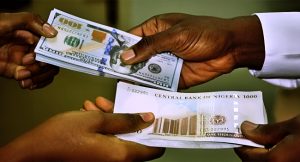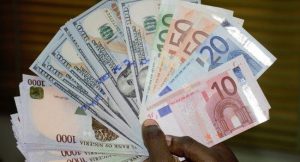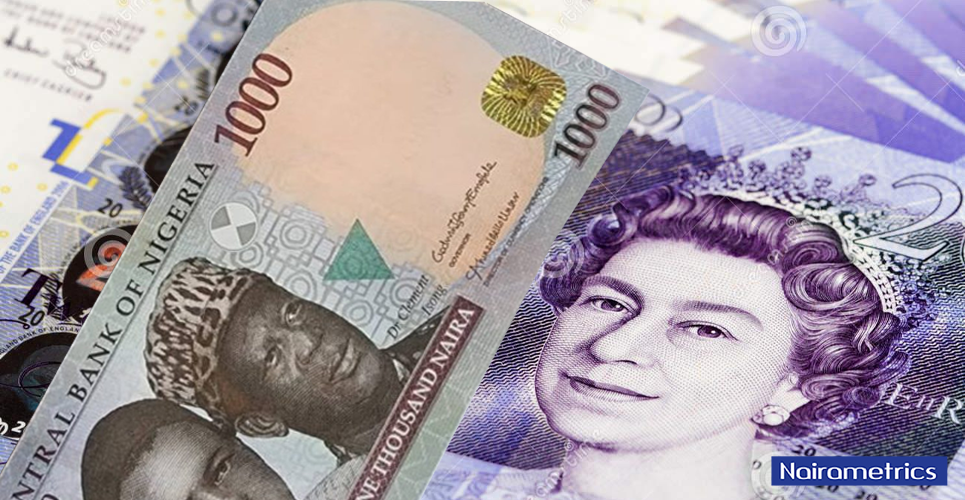
Most recent price action in the Nigerian foreign exchange market showed the Nigerian naira exhibited strength against the British Pound sterling amid increased uncertainty in the British economy.
Other News
CBN’s latest data showed that the British Pound Sterling is currently being traded at N1,840/£1.
The local currency recovered from its April lows and showed signs of resilience in the first half of May, while the British pound hit monthly lows amid a crisis in the UK ruling party.
The British pound sterling plummeted when one of the most well-liked Labor Party politicians in the country threatened to overthrow UK Prime Minister Keir Starmer.
The naira has remained in the N1825/£1–N1950/£1 price range amid the optics in the UK economy and the Central Bank of Nigeria’s liquidity management strategies, particularly as currency traders reacted to the political situation in the United Kingdom.
Latest market action showed the pair’s immediate support found around the N1,750-N1,800 psychological range, which, if the CBN aggressively injects dollars/foreign currency into the banking system, can occasionally see the naira rally back toward these levels.
Key resistance is near N1,880-N1,900, and a break above N1,900 on the official window often leads to a quick test toward the psychologically important N2,000 mark, often in a panic situation in the parallel market.
The Nigerian currency is essentially a “price” of foreign exchange (oil revenues and foreign portfolio investments) inflows, and when liquidity dries up in the official NAFEM (Nigerian Autonomous Foreign Exchange Market), it often creates pressure on the parallel market, which drives up the price of foreign currencies.
This has often caused increased volatility as structural adjustments (such as exchange rate harmonization and fuel subsidy removals) are ongoing, and the market is extremely sensitive to any change in CBN policy regarding dollar supply to Bureau de Change (BDC) operators and Nigerian lenders.
However, while the macro trend for the British pound sterling against the naira remains firmly bullish in the long-term frame, on shorter-term intraday charts, the pair is often characterized by sharp, blocky movements rather than smooth technical waves, which is quite common for pegged or heavily managed currencies with bursts of liquidity.
Africa’s most populous economy still struggles with high structural inflation, and while the CBN has in the past increased foreign exchange liquidity to defend the naira, the high local prices have reduced the currency’s real purchasing power.
British pound posts small gains against the U.S. dollar
The British pound’s most recent price action is observed fluctuating in a small trading band, but it is still expected to record modest weekly gains. Spot prices are currently 1.3430 on Friday’s trading session in the London time frame and capped near the 100-day Exponential Moving Average (EMA).
- Fundamentally, Sterling has been unable to attract significant buyers amid conflicting signals regarding the Bank of England’s (BoE) policy outlook and the political unpredictability in the UK.
- MPC member Swati Dhingra stated that if the BoE’s “scenario B”—in which higher energy prices have only mild second-round effects—comes to pass, it might not need to raise rates. Catherine Mann, another member, warned that wage agreements for 2027 might incorporate high inflation in the United Kingdom for late 2026.
BoE Governor Andrew Bailey stated on Wednesday that the central bank has had more time to evaluate the conflict’s economic effects due to an increase in market interest rates since the beginning of the Iran war. However, markets continue to factor in the potential for the BoE to raise interest rates at least once in 2026.
- However, in the face of significant leadership challenges to UK Prime Minister Keir Starmer, the GBP bulls appear cautious. This helps to keep the British pound Sterling/greenback pair under control, as does a bullish US dollar index.
- Meanwhile, Currency traders are pessimistic about a US-Iran peace agreement despite the positive headlines because of significant differences over Tehran’s nuclear program and a standoff over the crucial Strait of Hormuz.
Iran’s uranium enrichment and Tehran’s control over the vital waterway continue to be major points of contention in the negotiations, according to Mojtaba Khamenei, the Supreme Leader of the Islamic Republic. This is in addition to the hawkish expectations of the US Federal Reserve (Fed).