 Follow Us on Google Discover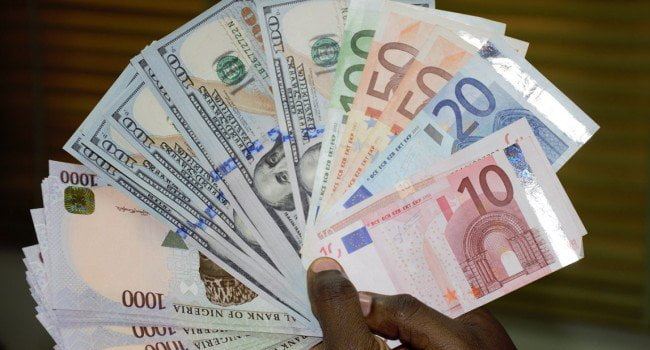
The Nigerian Naira is experiencing a period of discernible consolidation and relative structural stability against the Euro, in contrast to the severe volatility observed in prior years.
The spot exchange rate between EUR and NGN is currently trading at N1,601/€.
Macroeconomically, the pair began the year on January 2 at a high of N1,684/€.
The Naira has recovered about 5.3% against the Euro over the past five months.
Also Read
The CBN’s aggressive, traditional monetary policies are the main cause of this. A tight, sideways consolidation phase follows the Naira’s steady, grinding appreciation in EUR/NGN price action.
The CBN’s ability to sustain these strict liquidity conditions without stifling real-sector economic growth will be crucial to the short-to-medium-term trajectory of EUR/NGN. The 1,600/€ psychological level will likely serve as a powerful overhead resistance line for the Euro if OMO and benchmark interest rates remain at these high levels.
Volatility has decreased sharply throughout May. A stable trading range between N1,587/€ and 1,607/€ has been established for the pair.
his price compression pattern suggests a temporary balance in the official foreign exchange windows and a decrease in speculative attacks. The CBN Monetary Policy Committee (MPC) has maintained its Monetary Policy Rate (MPR) at a high rate of 26.5 percent.
This aggressive stance encourages capital to stay in Naira-denominated assets by generating high real-yield opportunities in short-term domestic debt instruments.
The Nigerian Central Bank is actively removing excess system liquidity to avoid structural Naira dilution. The CBN issued N9.71 trillion in bills in a single month as part of a massive open market operations (OMO) push.
These high OMO rates have successfully increased foreign portfolio inflows (FPIs), directly improving short-term dollar and euro liquidity within the local banking industry.
Nigeria has started to gain sovereign confidence, which has altered how foreign investors view the currency.
S&P Global Ratings upgraded Nigeria’s long-term sovereign credit rating from “B-” to “B” with a stable outlook amid a more market-driven exchange-rate environment, expanding tax bases, and a consistent decline in the debt-to-revenue ratio.
In addition, Nigeria has significantly expanded its refining capacity, with the Dangote Refinery getting close to its 650,000-barrel-per-day capacity. This structural change keeps foreign exchange reserves intact and shields the country’s current account balance from major external shocks
The International Finance Corporation (IFC) and the CBN recently partnered to inject over $1 billion into the economy to actively manage currency risks and increase local currency financing across critical sectors,
Euro Consolidates Against Greenback in Global Foreign Exchange Market
The euro is still stuck between $1.1670 and $1.175. The White House confirmed that the US and Iran have reached an agreement on a memorandum of understanding (MoU) to extend the ceasefire for 60 days to allow for formal negotiations, although US President Donald Trump has not yet given his approval.
The US and Iran still need to resolve several issues before an agreement on the war can be reached, according to US Vice-President JD Vance on Friday.
Traders will closely watch events surrounding the conflict in the Middle East. The euro (EUR) versus the US dollar (USD) could be affected by any indications of growing hostilities between the US and Iran.
However, exotic currencies and other risky assets might be supported by the peace agreement.
Policymakers at the European Central Bank (ECB) may push the EUR higher if they make hawkish comments.
Even if the ongoing peace negotiations with Iran result in a deal, ECB board member Isabel Schnabel said that the central bank should raise interest rates in June because the conflict has lasted far longer than anticipated, and high energy prices are affecting the entire economy.
The ECB’s two percent deposit rate hikes have been priced, and there is nearly a 50% chance that a third move will occur within the next year. According to a Reuters poll, economists are more cautious and predict only two rate increases before a cut in mid-2027.

Olumide Adesina is a financial market writer, analyst and investment trader. Message Olumide on Twitter @Olumidecapital