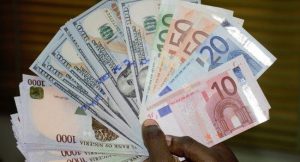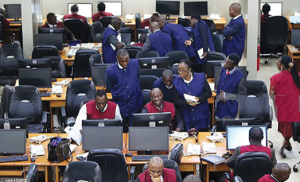
The Governor of the Central Bank of Nigeria (CBN), Olayemi Cardoso, has dismissed claims that the apex bank is aggressively intervening in the foreign exchange market to defend the naira, saying its interventions now account for only about 1.2% to 1.3% of total FX turnover.
Other News
Cardoso disclosed this on Wednesday at a press briefing in Abuja after the 305th meeting of the Monetary Policy Committee (MPC).
Asked whether the CBN had been intervening aggressively in the FX market amid recent pressure on external reserves, Cardoso said, “The answer is that it is not true.”
What the CBN governor said
Cardoso said the structure of Nigeria’s FX market had changed significantly, with daily turnover rising from about $100 million when the current CBN leadership assumed office to roughly $550 million.
- According to him, “At times, it has spiked as high as $1 billion on a daily basis. Not every day, but it has spiked. Now, the goal is for it to get to that $1 billion every day.”
Cardoso said the reforms introduced by the apex bank had deepened liquidity and reduced the need for regular intervention.
- He stated, “Where you have already a deepening foreign exchange market where liquidity rules the day, there is very little need for you to intervene. The market operates all on its own.”
- He added, “Relative to turnover in 2025, the CBN intervened in about 1.2, 1.3%. It was so small relative to turnover.”
Cardoso said the market had become more transparent and better anchored on a willing-buyer, willing-seller framework.
- “We have gotten to that stage where the market itself, due to the reforms that have been taking place, has been able to find its own level through willing buyer, willing seller, proper behaviour with respect to market conduct, transparency, with everybody feeling that there is more or less symmetry in terms of access to information,” he said.
New FX manual to boost transparency
The CBN governor also linked the improved FX market structure to recent reforms, including the FX Code, electronic trading platform and the revised foreign exchange manual.
He said the new FX manual, expected to take effect on June 1, would improve consistency and transparency in the market.
Cardoso said the manual would also make it easier for exporters to repatriate foreign exchange earnings into the official market.
He said, “It is going to make it easier for those who, in the past, used to export and were reluctant or diverted their funds elsewhere. It is going to make it a lot easier and more encouraging for them to bring their FX back into the system.”
He added that the reforms would support the CBN’s target of raising daily FX turnover to $1 billion over time.
Reserves pressure not alarming
On concerns over the movement in Nigeria’s external reserves, Cardoso said the public should not overread daily changes, noting that reserves were dynamic and affected by routine government obligations.
- He said, “There may be need to meet the requirements of various arms of government or loans, outstanding obligations due. They have to be paid. And so they are paid.”
He added, “But believe me, as they are paid, so does new money come in.”
Cardoso said reserves had recovered close to the levels recorded before the recent Iran-related geopolitical tensions.
- “We are literally back in numbers to where we were prior to the Iran war. We are literally back there again. And I believe that it will continue to be improving in that particular direction,” he said.
The governor maintained that FX stability remained central to the CBN’s inflation strategy, especially as Nigeria faces external price pressures.
He said the apex bank would sustain its current policy direction, deepen collaboration with fiscal authorities and continue to minimise exchange rate pass-through to domestic prices.
What you should know
Nairametrics earlier reported that the Monetary Policy Committee (MPC) of the Central Bank of Nigeria (CBN) retained the Monetary Policy Rate (MPR) at 26.5% following the conclusion of its 305th meeting.
The decision was announced by CBN Governor Olayemi Cardoso after the MPC meeting held in Abuja, where 11 committee members were in attendance.
The committee also retained all other key monetary policy parameters, reflecting a cautious approach as policymakers continue to monitor inflationary pressures and broader macroeconomic conditions.