 Follow Us on Google Discover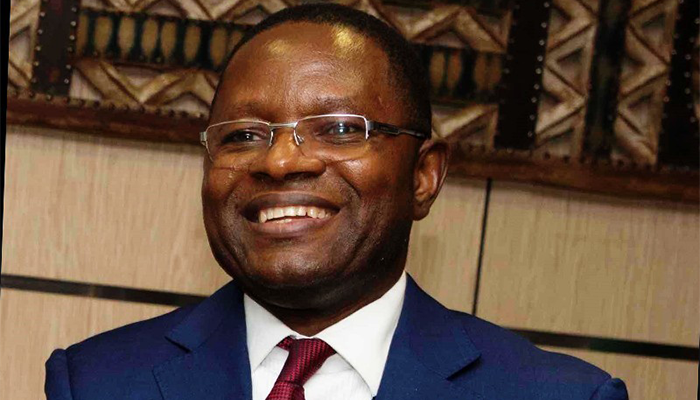
Africa can unlock more than $469 billion in additional annual revenue without increasing statutory tax rates, the African Development Bank (AfDB) has said, arguing that stronger tax administration and improved compliance could significantly expand government revenues across the continent.
The disclosure was made by Prof. Kevin Urama, Chief Economist and Vice-President for Economic Governance and Knowledge Management at the African Development Bank, during an interview with the News Agency of Nigeria (NAN) on Wednesday in Abuja.
Across Africa, governments have increasingly turned to tax reforms and adjustments to boost revenues amid rising fiscal pressures.
Nigeria, for instance, raised VAT from 5% to 7.5% in 2020, while several African countries have reviewed VAT regimes, broadened tax bases or proposed new tax measures in recent years as they seek to strengthen domestic revenue mobilisation.
Also Read
What they are saying
Urama said Africa has substantial untapped revenue potential that can be realised without imposing higher tax burdens on citizens and businesses, noting that domestic resource mobilisation remains the continent’s most reliable and sustainable source of development financing.
According to him, governments can unlock significant additional revenues by modernising tax administration, embracing digital tools and implementing proven reforms that improve compliance and reduce leakages.
- “We see that by improving tax administration through digitisation and other reforms, just adopting best practices, the continent can mobilise more than 469 billion dollars extra without increasing tax rates.”
- “It is simply about improving efficiency and strengthening compliance,” he added.
More insights
Urama noted that many citizens across Africa are hesitant to pay taxes because they often bear the responsibility of providing basic services that governments are expected to deliver, including electricity, water supply and road infrastructure.
- He argued that governments can improve voluntary tax compliance by ensuring better public service delivery, increasing transparency in public finance management and demonstrating that tax revenues are being used effectively for development.
- The AfDB economist said the bank is already supporting several African countries, including Nigeria, in strengthening domestic revenue mobilisation through technical assistance and capacity-building programmes for revenue authorities.
He added that the bank has also developed a Public Service Delivery Index aimed at helping governments improve the quality of public services while strengthening trust and accountability between citizens and the state.
According to Urama, stronger domestic revenue generation would reduce countries’ dependence on external borrowing and development assistance while providing greater fiscal space to fund critical national priorities.
What you should know
The AfDB’s recommendation comes as Nigeria intensifies efforts to expand tax collections through sweeping fiscal reforms and a revamped revenue administration framework.
In the first quarter of 2026, Nigeria generated N7.44 trillion in tax revenue, according to data from Nigeria Revenue Service (NRS).
- Despite the increase, collections fell short of the prorated target of N9.68 trillion by N2.24 trillion, representing a performance rate of 76.87%.
- The result contrasts with the same period in 2025 when the then Federal Inland Revenue Service (FIRS) generated N6.04 trillion, exceeding its target of N5.82 trillion by N218.02 billion and recording a performance rate of 103.74%.
- The Nigeria Revenue Service has maintained that the country’s new tax reforms have positioned it to generate N40.7 trillion in taxes and royalties in 2026, significantly higher than the N28.23 trillion collected in 2025.
The figures highlight both the progress Nigeria has made in boosting tax revenues and the broader challenge identified by the AfDB — improving efficiency, compliance and administrative capacity to unlock more revenue without necessarily raising tax rates.

Emmanuel Azubuike is a human interest journalist based in Lagos, Nigeria. With over four years of experience in journalism, he focuses on telling deeply reported stories at the intersection of markets, government policy, and technological advancement — and how they shape everyday lives.