 Follow Us on Google Discover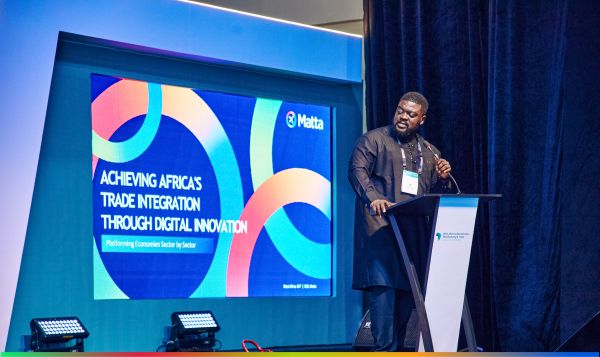
Matta says industrial trade across Africa is expanding through digitally coordinated systems that are changing how manufacturers source raw materials, chemicals, food ingredients, and industrial inputs across the continent.
The company, which operates across Nigeria, South Africa, Côte d’Ivoire, Ghana, Benin Republic, and Tanzania, said manufacturers are increasingly relying on infrastructure that provides supplier verification, procurement visibility, logistics coordination, and real-time trade execution.
According to Matta, the shift is becoming measurable through rising industrial trade volumes managed across its infrastructure platforms.
Over the last 12 months, trade flows coordinated through the company’s systems included 2.2 million litres of base oil, 800 tonnes of food ingredients, 465 tonnes of calcium propionate, and 350 tonnes of sugar moved within six months.
Also Read
The company said the figures reflect broader changes in the structure of industrial trade across African markets, where manufacturers are seeking systems that improve operational visibility and supply chain coordination.
“For a long time, African trade was discussed primarily through the lens of complexity and fragmentation,” said Mudiaga Mowoe, Chief Executive Officer at Matta. “What is changing now is operational visibility. Manufacturers are increasingly demanding systems that allow trade to move with greater reliability, coordination, and speed.”
Across the continent, manufacturers are facing increasing pressure to maintain production while sourcing materials from different countries and suppliers. This has increased demand for systems that allow businesses to monitor procurement, freight movement, supplier performance, and delivery timelines in real time.
Matta said it developed its infrastructure to support those needs through a network of integrated platforms focused on industrial trade operations.
Its Marketplace platform connects manufacturers and buyers with verified suppliers across chemicals, industrial commodities, raw materials, and food ingredients. Orbital by Matta supports supplier coordination, workflow management, and operational execution, while Flux by Matta manages logistics coordination, freight tracking, fleet visibility, and cross-border delivery operations.
The company said the systems were designed to support sourcing, fulfilment, logistics coordination, and operational continuity across multiple African markets.
According to Matta, the changes taking place across industrial trade are not simply about digitising transactions but about building infrastructure capable of supporting industrial-scale coordination across fragmented supply chains.
That includes supplier verification, procurement management, trade execution, logistics orchestration, and operational continuity across markets where manufacturers often face delays caused by poor visibility and disconnected systems.
Industry operators say these capabilities are becoming more important as African manufacturing activity grows and procurement processes become more structured.
“Manufacturers are no longer only asking whether volume can move,” said Mowoe. “They are asking whether it can move reliably, consistently, and with operational visibility across multiple markets at once.”
Recent discussions around African trade and industrial growth have also focused on the need for stronger regional trade systems and commodity coordination infrastructure.
Speaking at the Africa CEO Forum in Kigali, Nigerian President Bola Tinubu said all 54 African countries possess tradable commodities and questioned why the continent had not yet built stronger exchange systems “where we can trade with one another.”
For businesses operating within African industrial supply chains, the challenge is increasingly linked to coordination, visibility, and operational trust rather than the absence of supply.
Mowoe said Matta’s infrastructure was built specifically to address those issues by connecting supply discovery, supplier operations, and logistics coordination within one operational system.
“What has changed over the last few years is that entirely new infrastructure layers for African industrial trade have been built around visibility, coordination, and operational trust,” she added. “Matta has spent years building those systems quietly across the continent.”
As industrial trade volumes continue to increase across Africa, companies involved in procurement, supplier management, and logistics coordination are expected to place greater focus on infrastructure capable of supporting long-term operational continuity across regional markets.

NM Partners features content from corporate organizations, institutions, and other stakeholders. Some posts are sponsored.
Publication does not imply endorsement. Views expressed are solely those of the contributors.
For more details, please see our Nairametrics Media Partnership Guidelines or contact [email protected].