 Follow Us on Google Discover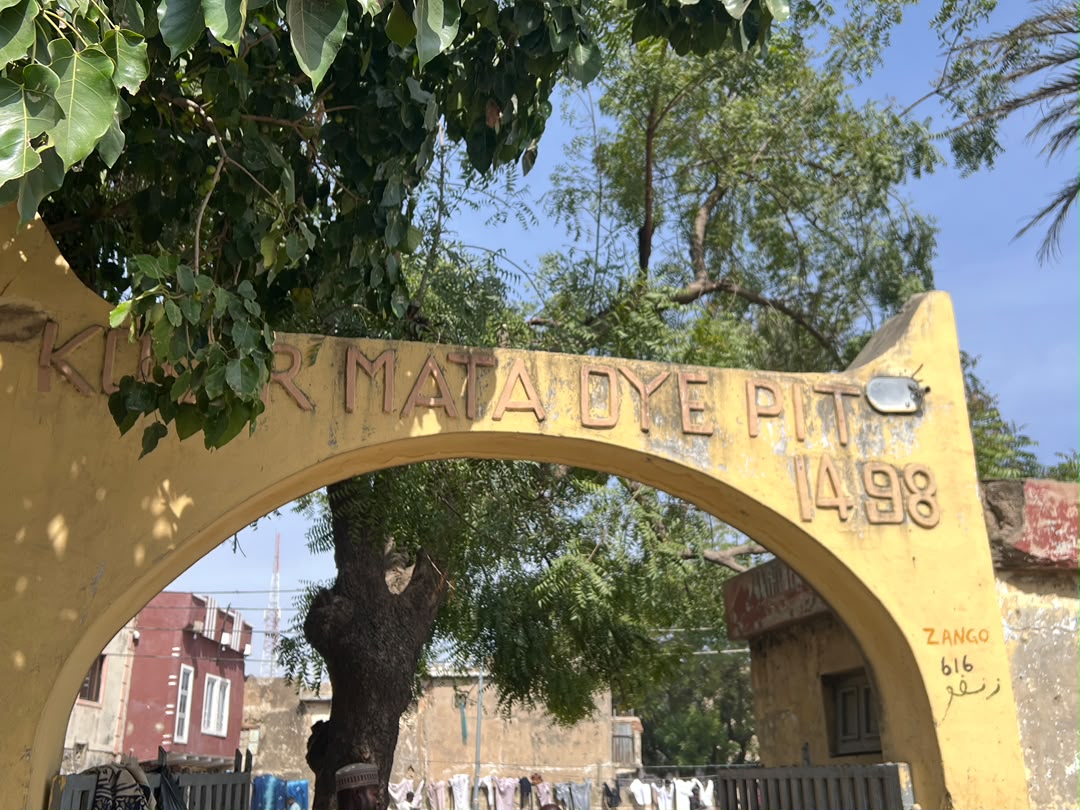
When I published the first article in this series, Culture Is No Longer Soft Power. It Is Economic Infrastructure, in April 2026, the objective was to introduce a different framework for thinking about culture and development in Africa.
The argument was specific: culture should no longer be understood primarily through the lens of identity or influence, but as economic infrastructure, an asset capable of shaping investment flows, consumer demand, tourism, exports, talent attraction, and long-term economic competitiveness.
That framing was deliberate, and it represented a particular analytical position at a particular moment in time.
What has happened since is both encouraging and instructive. The framework introduced in the first article, and developed further in the second, has moved quickly into broader circulation.
Also Read
The language and concepts explored throughout the series have increasingly appeared across government, policy, institutional, and industry conversations in ways that were not common when the series began.
Culture is now being discussed more frequently as an economic asset and a form of infrastructure rather than solely through the lens of visibility, representation, or soft power. That shift is encouraging because the language we choose often determines how a sector is understood, prioritized, financed, measured, and ultimately developed.
Now, the question is what comes next.
If the first phase of the conversation was understanding that culture creates economic value, and the second was understanding how systems influence who captures that value, then the third question is what it takes to build durable cultural and creative economies. Creating value is one thing. Sustaining it across generations, connecting it to economic participation, and building institutions capable of compounding it over time is something else entirely.
That question is ultimately an institutional one.
Economic infrastructure does not emerge simply because value exists. Capital markets did not emerge because capital existed. Telecommunications infrastructure did not emerge simply because people wanted to communicate. Financial systems did not emerge because commerce existed.
In each case, institutions, standards, financing mechanisms, legal frameworks, and measurement systems were deliberately constructed around an underlying source of value.
Culture is no different.
In practical terms, that means building the same supporting architecture that exists around other economic sectors: reliable measurement systems, effective rights managements and administration systems, origin and attribution frameworks, specialized financing vehicles, professional talent pipelines, and institutions capable of translating cultural activity into long-term economic participation.
Without those systems, value may be created, but it becomes far more difficult to retain, scale, and compound over time.
If culture is to function as genuine economic infrastructure, the conversation must increasingly focus on what surrounds it and what is required to build a durable cultural economy.
The challenge is no longer proving that culture matters. The challenge is building systems that can convert cultural influence into long-term economic participation.
Some of those questions are familiar. How do countries develop stronger institutions around cultural industries? How do they finance growth? How do they create environments where creative businesses can scale? How do they strengthen the legal, regulatory, and commercial frameworks that support long-term value creation?
Others are more complex.
My visit to the Kofar Mata Dye Pits in Kano in December 2024 offers a useful illustration of the challenge. Established in 1498, the dye pits are widely regarded as one of the oldest continuously operating dyeing centers in Africa.
Walking through the site and observing techniques preserved across generations, I was reminded that some of Africa’s most valuable cultural assets are not emerging industries. They are centuries-old traditions that continue to shape contemporary markets.
During that visit, I had the opportunity to speak with a member of the seventh generation of custodians responsible for preserving the dye pits. As we discussed their work, he mentioned that fabrics produced there are supplied to designers in different parts of the world.
I asked whether those designers typically credit Kano or the dye pits as the origin of the fabrics or techniques they were using. He told me he did not know. I then asked whether there was a distinctive signature, or marker that would allow someone encountering the finished product elsewhere to trace it back to its source. Apart from the uniqueness of their techniques and craftsmanship, he said there was not.
The exchange stayed with me long after I left. Not because it suggested wrongdoing, but because it highlighted a larger challenge. What struck me was not that the fabric traveled. Trade, exchange, and influence are natural parts of how culture evolves. What struck me was how difficult it appeared to be to trace that influence once it left Kano. What happens when cultural influence travels much further than the systems designed to identify its origin?
Across industries, origin often forms part of the value proposition. Consumers understand the significance of French luxury goods, Italian leather, Swiss watches, Japanese craftsmanship, and Scottish whisky. In each case, the place of origin contributes to authenticity, differentiation, perception, and ultimately economic value. The origin itself becomes part of what is being purchased.
Yet many cultural traditions across Africa continue to influence global markets without the same degree of attribution, documentation, provenance, authentication, or commercial connection to the ecosystems from which they emerged.
When fabric is purchased from the Dye Pit in Kano, the transaction itself is relatively straightforward.
They are compensated for what is sold. However, the techniques, aesthetics, and cultural references embedded within that product can continue generating value long after the original transaction has taken place. They may influence future collections, inspire new products, shape broader design trends, or become part of larger commercial ecosystems operating far beyond their place of origin.
This is not necessarily a story about wrongdoing, nor is it always something conventional intellectual property protections can solve. Rather, it raises a broader question about whether we have developed systems sophisticated enough to connect cultural origin, cultural influence, and long-term economic participation. As Africa’s cultural influence continues to expand globally, there are real opportunities to think more intentionally about how those connections are preserved. This is not simply a cultural question. It is an economic one.
There is also the question of measurement, and this deserves more attention than it typically receives.
Governments track oil production, agricultural output, manufacturing activity, and financial sector performance because those figures drive investment decisions, policy choices, and resource allocation. The same discipline has not been applied consistently to culture. Cultural exports, royalties and licensing revenues from creative works, income derived from cultural and creative intellectual property, sports economy activity, creative sector employment, and cultural tourism often remain fragmented across different datasets, inconsistently measured, or absent from national accounting frameworks altogether.
International organizations including UNESCO and the OECD have repeatedly highlighted the need for stronger measurement systems for cultural and creative economy, noting that weak or inconsistent data limits effective policymaking and investment. Consequently, culture’s economic contribution is frequently underestimated, which in turn influences how seriously it is funded and governed.
The contrast with countries that have built robust measurement systems is instructive. South Korea offers a compelling example of what systematic measurement makes possible. Its Ministry of Culture, Sports and Tourism tracks the content industry across eleven sectors, including publishing, music, film, gaming, animation, and broadcasting, measuring revenue, exports, employment, and business count every year.
In 2024, domestic content industry revenue surpassed $109 billion and exports topped $14 billion, both all-time highs. That data does more than tell a story. It enables policy, attracts investment, and gives the government a precise basis for where to deploy resources next. Studies have shown that every $100 million increase in South Korean content exports generates $180 million in related consumer goods exports and stimulates more than $500 million in total production. That kind of downstream linkage analysis is only possible because the measurement foundation exists.
Malaysia, more recently, launched its inaugural Cultural and Creative Satellite Account in 2024. It found that the cultural and creative industry contributed 6.8 percent of GDP, with exports of creative products reaching RM63 billion and employment in the sector accounting for 4.7 percent of total national employment. In one publication, Malaysia moved from informed guesswork to a credible, investable number.
The point is not that these countries have figured everything out. The point is that they have built measurement systems that make culture more visible as an economic sector. That visibility creates new possibilities for policymaking, investment, and long-term growth.
Without comparable frameworks, it becomes much harder to attract investment, design effective policy, or make the case for culture in budget conversations. What remains uncounted remains peripheral, regardless of its actual contribution. If culture is economic infrastructure, then the inability to measure its full contribution is not a reporting problem. It is a structural one. Building robust measurement systems is not administrative work. It is part of building the infrastructure itself.
Across this series, the argument has moved through three connected questions: how culture creates economic value, who controls the systems through which that value is captured, and what still needs to be built.
The thread connecting all three is simple: creating value is one thing. Determining who benefits from it is another.
The next chapter of the cultural economy will be written less by cultural influence itself and more by the institutions built around it.
The answer to the first question has largely been settled by markets, capital flows, and the scale of what African creativity has already achieved. The second question remains more contested, and the gap between cultural influence and economic participation remains significant. The third question is where the real work now sits. That work is institution-building.
It is rights systems that function at scale. It is measurement frameworks that make cultural contribution visible. It is attribution mechanisms that connect origin to long-term value. It is financing structures that extend into ownership rather than stopping at production. It is the executive, technical, legal, and commercial talent required to operate all of it with consistency.
None of this is simple. But none of it is beyond reach.
The window is not permanent. Visibility is growing, audiences are expanding, and capital continues to move. The question is whether the systems required to retain the value of that moment will be built in time to shape how it is distributed.
Infrastructure, in the end, is not defined by what it produces in a single generation. It is defined by what it makes possible across many.
If African culture is to function as genuine economic infrastructure, not simply for the markets and platforms that distribute it, but for the creators, communities, and countries from which it originates, then the systems surrounding culture must be built with the same seriousness, intentionality, and long-term commitment that have gone into building the culture itself.
Because influence creates opportunity. Systems determine outcomes.
This article concludes the three-part series: Culture Is Economic Infrastructure.
Author
Gbemisola Abudu is the Founder and Managing Principal of BMGA Advisory, where she advises corporations, investors, founders, and governments on market entry, expansion strategy, and long-term value creation across Africa and global markets.
Her work focuses on helping organizations navigate complex growth decisions, build durable market positions, and translate opportunity into execution. She works at the intersection of culture, capital, and systems, with a particular interest in cultural economies, creative industries, sports economies, and how competitive advantage is built over time.

Nairametrics frequently publishes articles from experts such as financial analysts, economists, researchers and investors. We also feature articles from guest writers and bloggers who wish to push their views and opinions through our platform.
To get your articles on Nairametrics, kindly send an email to
[email protected] and we will publish it within 24 hours of approval by our editorial team.