 Follow Us on Google Discover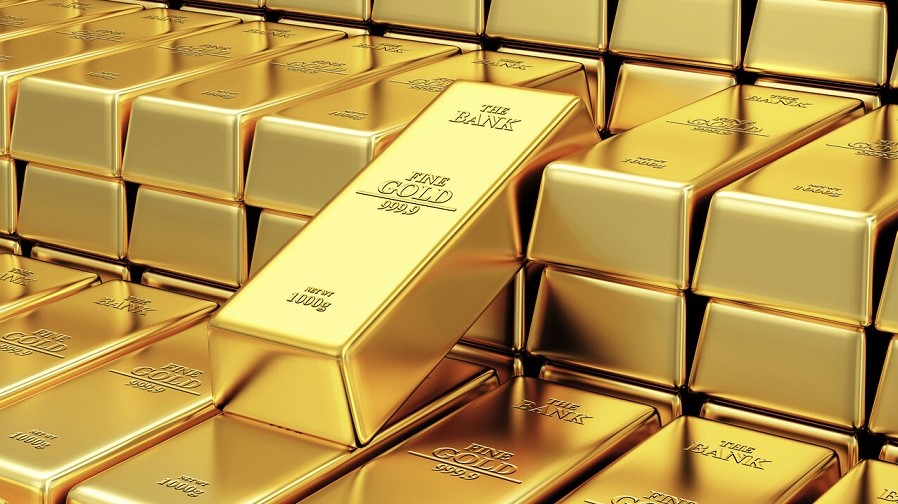
Ghana is seeking a 10% increase in the amount of gold large-scale miners sell to its central bank as part of efforts to strengthen national reserves and tighten oversight of bullion exports.
According to Reuters, the development was disclosed by Paul Bleboo, head of the Bank of Ghana’s Gold Management Programme, who said the country now wants industrial miners to supply 30% of their annual gold production to the central bank, up from the current 20% arrangement.
The move comes as Ghana, Africa’s largest gold producer, intensifies efforts to build up bullion reserves while improving traceability across the gold export chain amid rising global demand for the precious metal as a reserve asset.
What they are saying
Bleboo said on Thursday that Ghana intends to renegotiate its agreement with industrial miners to increase the portion of annual gold production sold to the central bank, with all deliveries expected in dore form to strengthen monitoring and reserve management.
Read Also
- “This time, we intend to negotiate for 30% of annual production [from industrial miners] … with the entire 30% to be delivered in dore form,” Bleboo said.
Ghana, Africa’s leading gold producer, launched its bullion purchase programme in 2022 as part of measures to stabilise the economy and reduce pressure on foreign exchange reserves.
The initiative later resulted in an agreement between the central bank and the Ghana Chamber of Mines requiring large-scale mining companies to supply 20% of their annual gold output to the Bank of Ghana.
- The proposed increase to 30% would mainly affect industrial and large-scale gold miners operating in the country.
However, negotiations with miners remain unresolved. According to the Chief Executive Officer of the Ghana Chamber of Mines, Kenneth Ashigbey, discussions around pricing structures and discounts were still ongoing and no final agreement had been reached.
Get up to speed
The move to increase gold sales from large-scale miners comes weeks after Ghana moved ahead with the new royalty reform for the mining sector despite pressure from the United States, China and other Western governments to reconsider the plan.
- Under the revised framework, Ghana plans to replace its fixed 5% mining royalty with a sliding-scale model tied to global commodity prices. The policy would see royalty payments rise as gold prices increase, with miners potentially paying as much as 12% when bullion prices approach around $4,500 per ounce.
- Lithium producers would also be subjected to a variable royalty structure ranging between 5% and 12%, while other minerals would continue under the existing flat 5% rate.
The reforms come amid a sharp rally in global gold prices this year, driven largely by geopolitical tensions, economic uncertainty, and investor concerns over the independence of the U.S. Federal Reserve. Rising bullion prices have pushed central banks across several countries to increase gold purchases as part of broader reserve diversification strategies.
What you should know
Ghana remains Africa’s largest gold producer and one of the world’s top bullion producers, with annual gold output reaching about six million ounces in 2025.
Gold is central to the Ghanaian economy, accounting for roughly 40% of the country’s export earnings and serving as a major source of foreign exchange revenue.
- Despite its strong production levels, most of Ghana’s gold is exported in raw or semi-processed form, with limited domestic refining capacity.
- In August 2024, Ghana inaugurated its first commercial gold refinery, the Royal Ghana Gold Refinery, a public-private partnership between India’s Rosy Royal Minerals and the Bank of Ghana, which holds a 20% stake in the facility.
The refinery was launched as part of broader efforts to increase local value addition, improve traceability, and strengthen Ghana’s position in the global gold supply chain.

Emmanuel Azubuike is a human interest journalist based in Lagos, Nigeria. With over four years of experience in journalism, he focuses on telling deeply reported stories at the intersection of markets, government policy, and technological advancement — and how they shape everyday lives.