 Follow Us on Google Discover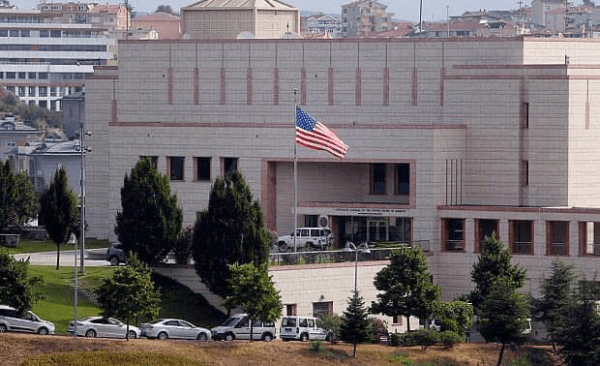
Lagos has been retained as one of 20 African cities that will continue to serve as U.S. visa processing hubs under a sweeping restructuring plan by the United States State Department.
The move will significantly reduce the number of embassies and consulates handling visa applications across Africa from nearly 50 to 20.
The decision, reported by the Associated Press (AP) on Monday, is based on an internal memo and statements from three U.S. officials.
Under the new arrangement, applicants from countries without designated hubs will be required to travel to approved cities, including Lagos, for full visa processing services.
Also Read
What they are saying
The restructuring is part of a broader U.S. policy shift aimed at tightening immigration controls and improving visa screening efficiency across its global missions.
Officials said the changes are linked to efforts to curb visa overstays and strengthen border enforcement, alongside a wider reduction in consular staffing levels worldwide.
The State Department said it is reviewing overseas operations to ensure more efficient deployment of resources in line with U.S. national interests.
- “The State Department plans to drastically slash the number of U.S. embassies and consulates in Africa that can process visas for foreigners seeking to come to the United States.
- “The almost 50 U.S. embassies and consulates that are processing visa applications will be reduced to 20 in the coming weeks, according to three U.S. officials and an internal memo obtained by The Associated Press,” the report read in part.
The internal memo reportedly listed the 20 African hubs that will retain full visa processing capacity: Abidjan, Accra, Addis Ababa, Cape Town, Dakar, Dar-es-Salaam, Djibouti, Johannesburg, Kampala, Kigali, Kinshasa, Lagos, Lomé, Luanda, Malabo, Monrovia, Nairobi, Port Louis, Praia, and Yaoundé.
The report noted that Officials also noted that non-hub missions will continue limited operations focused on American citizen services, emergency response, and select diplomatic functions.
More insights
The State Department has said the restructuring is part of its ongoing effort to ensure visa operations meet security requirements while managing limited diplomatic resources.
While implementation timelines remain fluid, officials say the changes are expected to roll out soon.
Applicants in non-hub countries will likely face longer travel distances, higher costs, and additional logistical requirements when applying for U.S. visas.
- Consular sections in non-hub countries will remain open but with reduced functions.
- Services will focus primarily on U.S. citizens and emergency assistance.
- Visa applicants will need to travel to designated hubs such as Lagos for processing.
The shift is expected to place greater operational pressure on high-volume hubs like Lagos, Johannesburg, and Nairobi.
Why this matters
The policy could significantly reshape access to U.S. visa services across Africa, particularly for applicants in smaller or landlocked countries.
For businesses, students, and professionals, the change introduces additional travel costs, delays, and administrative hurdles that could affect mobility and cross-border opportunities.
It also strengthens the role of major regional cities such as Lagos as key diplomatic and consular centres, potentially increasing their strategic importance in international mobility and trade flows.
- The consolidation may increase demand pressure on existing hubs.
- Travel costs for visa applicants are expected to rise across the continent.
- The policy highlights a broader tightening of U.S. immigration and border management systems.
Overall, the restructuring reflects a balance between security priorities and operational efficiency in U.S. foreign service delivery.
What you should know
The United States maintains a diplomatic mission in Nigeria through its Embassy in Abuja and Consulate General in Lagos, which remain central to visa and diplomatic services in the country.
The Embassy in Abuja handles broader political and diplomatic relations, while the Lagos consulate focuses heavily on visa and commercial services.
- The U.S. Embassy in Abuja oversees political, economic, and consular coordination for northern Nigeria.
- The U.S. Consulate General in Lagos manages most visa applications and commercial engagement in southern Nigeria.
- A new consulate campus is under construction in Eko Atlantic City, Lagos, aimed at expanding capacity and modernising operations.
The ongoing expansion and consolidation of visa processing functions further highlight Nigeria’s role as a key diplomatic and mobility hub for the United States in Africa.

Caleb Obiowo is a graduate of Urban and Regional Planning from the University of Uyo. At Nairametrics, he covers transport and logistics in Nigeria, along with real estate, construction, and aviation. He focuses on delivering clear, easy-to-understand stories and often digs deeper into industry issues through conversations with key players.