 Follow Us on Google Discover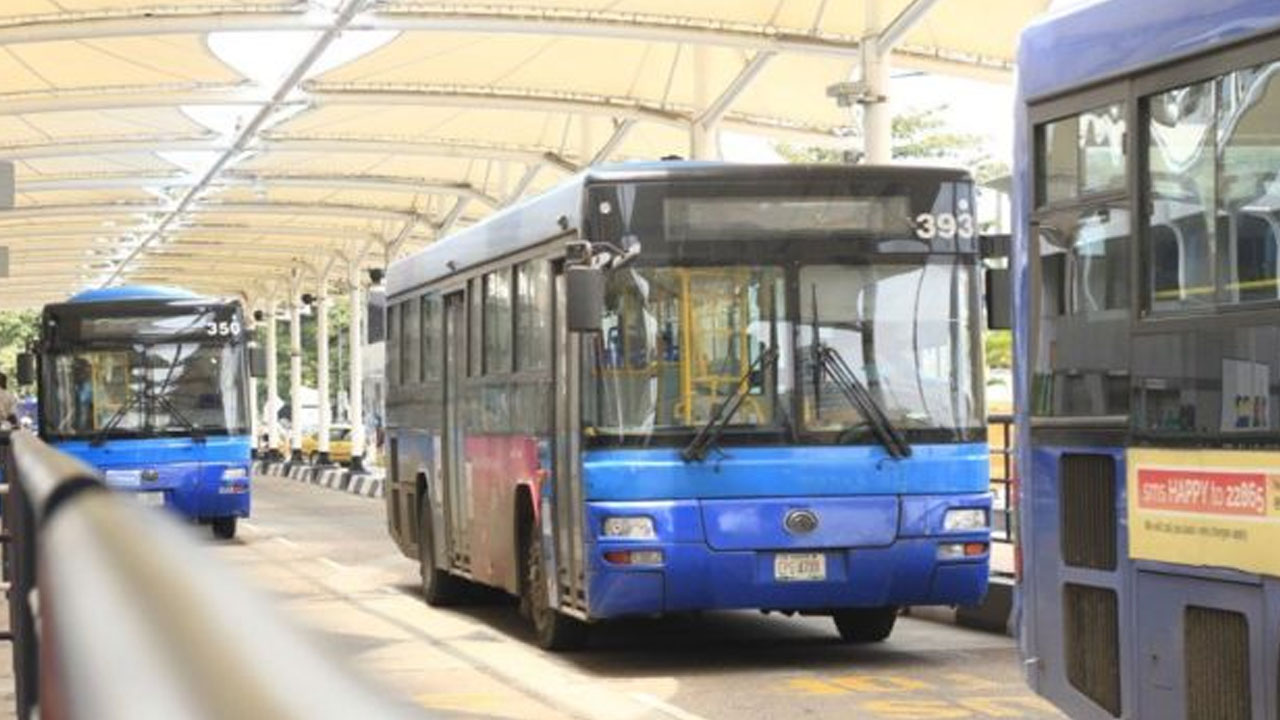
The Lagos Metropolitan Area Transport Authority (LAMATA) has suspended the movement of goods on all regulated public buses across Lagos State, with enforcement set to begin on June 1, 2026, as authorities move to improve commuter comfort and operational efficiency.
The directive was contained in a statement issued on Tuesday by Kolawole Ojelabi, Head of Corporate Communication at LAMATA.
The agency said the decision was aimed at restoring order, improving passenger comfort, and ensuring safer and more efficient operations within Lagos’ regulated public transport system, where buses had increasingly been used for hauling goods alongside passengers.
What they are saying
According to the statement, the suspension followed growing complaints from commuters and operational challenges linked to the use of regulated buses for transporting goods and heavy loads.
Also Read
According to the agency, the practice had begun to compromise passenger comfort, safety, and the efficiency of bus services across the state.
- “The Lagos Metropolitan Area Transport Authority (LAMATA) has announced an immediate suspension of the movement of goods on all regulated public transport buses across Lagos State, effective 1 June 2026.”
- “The decision follows growing complaints and operational challenges faced by commuters as a result of the increasing use of regulated buses for the transportation of goods and heavy loads, thereby compromising passenger comfort, safety, and efficient service delivery.”
The statement further noted that any driver found conveying goods in regulated buses will be summarily dismissed and blacklisted, while terminal officials or staff aiding such practices will also face immediate dismissal.
LAMATA explained that the decision was reached after a strategic meeting with heads of operations and maintenance of bus operating companies, where stakeholders agreed that the practice needed to be halted and properly reorganised.
More insights
The authority stressed that the goal was not only enforcement but also the creation of a more balanced and sustainable transport system that prioritises commuters while maintaining order within the sector.
- In Lagos, regulated public buses supervised by LAMATA include the Bus Rapid Transit (BRT) system and other franchise bus services operating across major corridors in the state.
- Due to their accessibility and the use of dedicated lanes on several routes, many commuters and small-scale traders have, over time, relied on the buses to move goods alongside passengers.
- The buses are often used to transport travelling boxes, market goods, electronics, food items, and other bulky personal belongings, usually at no additional cost to passengers.
- Because the buses are designed with standing capacity for commuters, many passengers have taken advantage of the relatively spacious interiors to convey loads as a cheaper alternative to commercial logistics services.
The agency further warned that enforcement would be strict and uncompromising once the directive takes effect, adding that there would be zero tolerance for violations by transport operators, terminal staff, commuters, and the general public.
What you should know
Lagos State is set to shift its long-term transportation strategy away from road expansion toward a multimodal system centred on rail, Bus Rapid Transit (BRT), and ferry services under its updated 2050 mobility master plan.
- LAMATA recently disclosed this following a high-level stakeholders’ workshop held to revise the Strategic Transport and Mobility Master Plan (STMMP).
- Lagos plans to modernise its public bus fleet with cleaner energy options and improve last-mile connectivity to ease commuter access and expand urban mobility.
The revised framework positions mass transit as the backbone of Lagos’ future transport system, with integration expected to boost efficiency, accessibility, and long-term sustainability across the state.

Caleb Obiowo is a graduate of Urban and Regional Planning from the University of Uyo. At Nairametrics, he covers transport and logistics in Nigeria, along with real estate, construction, and aviation. He focuses on delivering clear, easy-to-understand stories and often digs deeper into industry issues through conversations with key players.