 Follow Us on Google Discover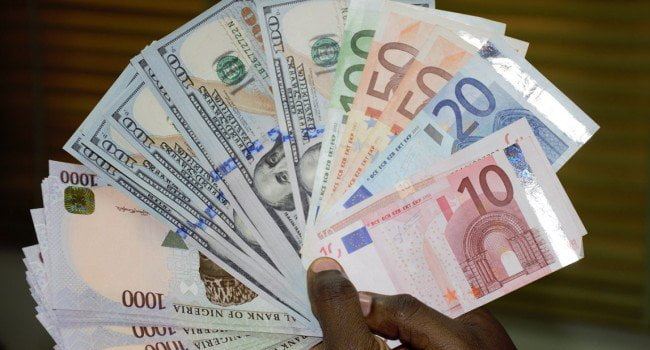
The Euro depreciated against the Nigerian Naira by roughly 5.4%, from 1,684.00 at the start of the year to around N1,592.5 on Wednesday, amid a major macroeconomic stabilization phase led by the CBN, which has strengthened the Naira from its historic lows.
The CBN has kept its benchmark monetary policy rate at 26.5%, a rate that has driven demand for foreign portfolio investments in Nigerian government debt.
Central Bank of Nigeria Governor Olayemi Cardoso told reporters during a briefing that MPC members were “of the view that a cautious and vigilant policy stance is necessary to anchor inflation expectations and safeguard macroeconomic stability.
According to Cardoso, reforms have “significantly bolstered the economy’s ability to absorb external shocks.” The pass-through of global commodity and energy price shocks to domestic inflation has been significantly mitigated.
Also Read
In addition, the CBN has shifted its focus toward a “willing buyer, willing seller” model, clearing large foreign exchange backlogs with foreign investors and allowing Bureau de Change (BDCs) to access official dollar markets to provide retail liquidity and bridge the gap between the official and parallel market rates.
Nigeria has begun to build sovereign confidence because of ongoing fiscal and structural reforms, changing the way international investors perceive the currency.
S&P Global Ratings upgraded Nigeria’s long-term sovereign credit rating from ‘B-‘ to ‘B’ with a stable outlook, citing a market-driven exchange-rate environment, broadening tax bases, and a steady reduction in the debt-to-revenue ratio. Energy.
Consequently, Nigeria has dramatically increased its refining capacity with the Dangote Refinery nearing its 650,000-barrel-per-day capacity, thereby reducing the urge to purchase foreign exchange for petrol importation
This structural change protects the nation’s current account balance from significant international shocks and maintains foreign exchange reserves.
The International Finance Corporation (IFC) recently teamed up with the CBN to actively manage currency risks and expand local currency financing across vital sectors to inject more than $1 billion into the economy.
European Currency tamed by high geopolitical uncertainty in global foreign exchange market
The European Central Bank’s (ECB) sharply hawkish shift, brought on by severe geopolitical and inflationary pressures, is the main fundamental factor driving recent movement in the Euro against the US Dollar.
- The EUR/USD pair is currently trading at 1.1624 as the market as a whole considers these changing dynamics, retreating from highs near 1.18 earlier in the month.
- The fundamental narrative has suddenly changed after maintaining its core deposit facility rate at 2.00 percent (and the primary refinancing rate at 2.15 percent).
- Energy prices have sharply increased because of the ongoing conflict in the Middle East. As a result, ECB employees have raised their headline inflation estimates to an average of 2.6 percent.
Central bank officials, such as Olli Rehn, the governor of the Finnish Central Bank, have publicly cautioned that the Eurozone is approaching a dire situation in which rate increases might be necessary to maintain credibility and bring sticky inflation down to its 2 percent target.
Currency traders are still concerned about a US-Iran peace agreement amid significant differences over Tehran’s nuclear program and a standoff over the vital Strait of Hormuz, despite renewed hopes for a de-escalation in the Iran conflict.
Additionally, hawkish FOMC Minutes reiterated an interest rate increase in 2026, which serves as a headwind for the EUR/USD pair and limits the US dollar’s corrective decline from a six-week low.
The threat of slower Eurozone economic growth slowed the major European currency from launching a full-scale rally against a fundamentally strong greenback, even as the ECB is essentially preparing the markets for tighter monetary policy to fight war-driven energy inflation.

Olumide Adesina is a financial market writer, analyst and investment trader. Message Olumide on Twitter @Olumidecapital