 Follow Us on Google Discover
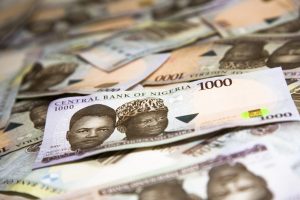
Nigeria’s foreign exchange reserves recorded a strong rebound in May 2026, rising by about $551 million within the first three weeks of the month after experiencing sustained pressure throughout April.
This is according to the latest figures released by the Central Bank of Nigeria (CBN).
Data from the apex bank showed that gross external reserves increased from $48.34 billion on May 4 to $48.89 billion as of May 21, 2026, reflecting renewed improvement in Nigeria’s external liquidity position and growing confidence in the foreign exchange market.
The recovery follows a difficult April in which reserves declined steadily amid persistent FX interventions, external debt payments, and broader global market pressures.
Also Read
What the data is saying
CBN data showed that Nigeria’s reserves weakened consistently throughout April before recovering strongly in May.
- External reserves stood at $49.18 billion on April 1 before declining to $48.94 billion by April 7.
- The reserves position dropped further to $48.63 billion by April 17.
- By April 30, reserves had declined to $48.36 billion.
However, the trend reversed in May as reserves climbed steadily from $48.34 billion on May 4 to $48.89 billion by May 21, representing a gain of more than half a billion dollars within the period.
More insights
Speaking after the latest Monetary Policy Committee (MPC) meeting, CBN Governor Olayemi Cardoso described the reserve position as a key source of investor confidence.
- “This strong buffer continues to reinforce investor confidence in the Nigerian economy and support exchange rate stability,” Cardoso stated.
Speaking earlier during a press briefing at the end of the International Monetary Fund (IMF) Spring Meetings in April, the CBN governor said Nigerians often overreact to relatively minor movements in reserve figures.
- “In fact, what concerns me is not so much the decline in reserves, but the reaction to relatively small swings in the numbers, which in today’s market environment should not trigger anxiety,” Cardoso said at the time.
What you should know
Nairametrics previously reported that reserves declined from above $50.08 billion on March 12 to $49.61 billion by March 23, 2026.
In January 2026, reserves increased by about $509 million within the first 22 days, reflecting improved foreign exchange inflows at the time.
Nigeria’s external reserves have strengthened significantly over the past year following foreign exchange reforms introduced by the Central Bank of Nigeria under President Bola Ahmed Tinubu’s administration.
Nairametrics previously reported that Nigeria’s external reserves declined by approximately $855 million within five weeks.
- The recent decline represents a reversal of that earlier upward trend.
- In October 2018, reserves dropped by $1.1 billion within two weeks, highlighting a pattern of short-term fluctuations
- The apex bank had previously projected that reserves could reach $51 billion by the end of 2026 as part of its broader macroeconomic stabilization and confidence-restoration agenda.

Olalekan Adigun is a seasoned political analyst and writer with extensive experience in crafting compelling narratives and executing strategic initiatives. Known for his insightful commentary on governance, policy, and socio-economic issues, he has contributed to various national and international platforms.