 Follow Us on Google Discover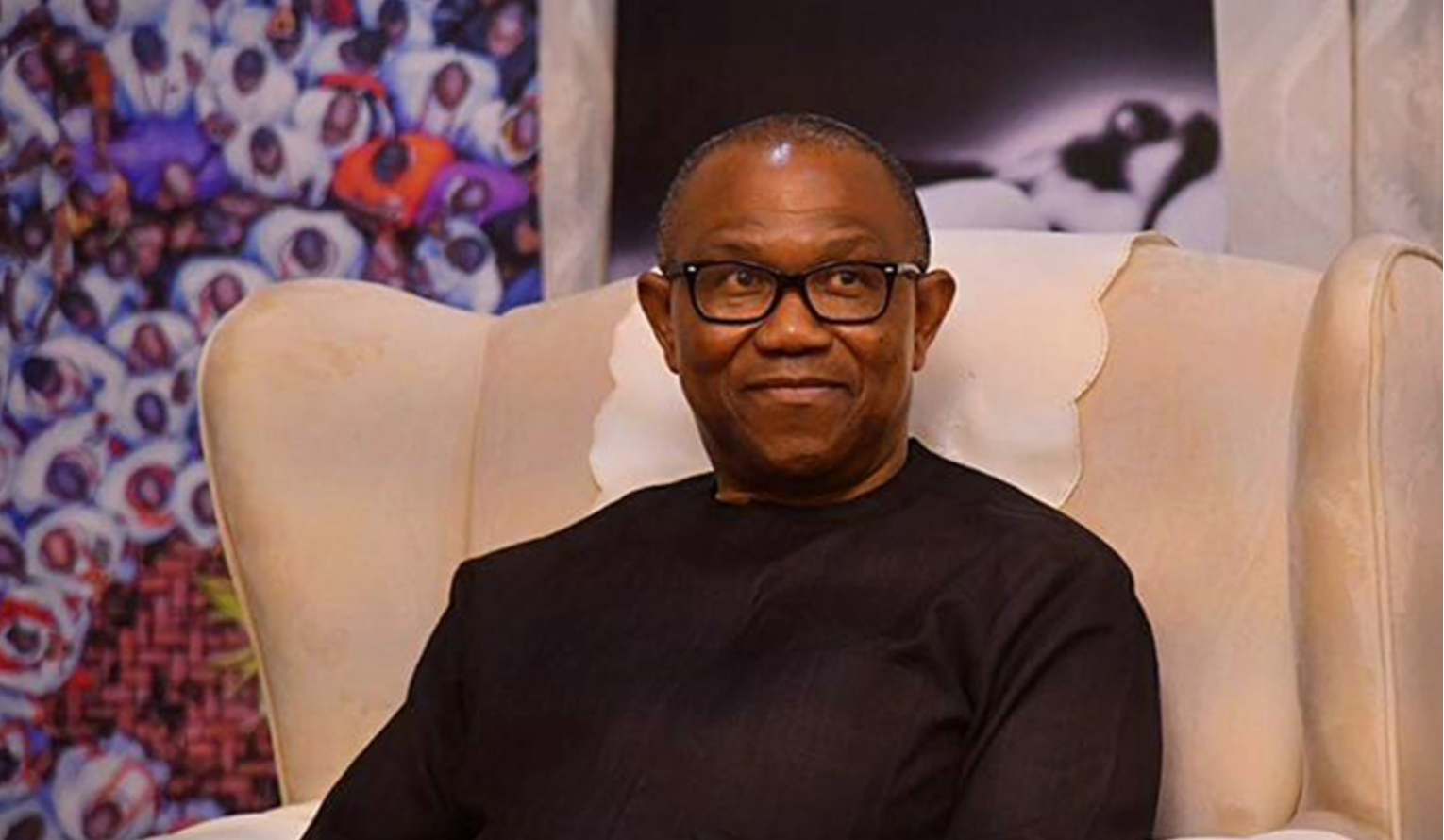
Former Anambra State Governor, Peter Obi, has expressed concern over Nigeria’s rising debt servicing obligations, warning that the country’s plan to spend about $11.6 billion on debt repayments in 2026 should worry Nigerians and raise broader questions about the government’s fiscal priorities.
Obi disclosed this on Monday, May 18, through a statement published on his official X account.
Obi’s reaction is coming days after Bola Tinubu, while speaking at the recent Africa Forward Summit in Nairobi, Kenya, co-hosted by Emmanuel Macron and William Ruto, disclosed that Nigeria is projected to spend approximately $11.6 billion on debt servicing in 2026 — a development that could further shrink fiscal space for critical sectors.
What Obi is saying
Obi, who is hoping to secure the presidential ticket under the Nigeria Democratic Congress (NDC) ahead of Nigeria’s next general election, admitted that borrowing itself is not necessarily a problem if it is properly managed and invested productively.
Also Read
- “During his recent foreign tour, President Bola Ahmed Tinubu stated that Nigeria will spend about $11.6 billion on debt servicing, a figure that should concern anyone interested in the country’s economic future and long-term development,” Obi said.
According to him, many developed economies across the world are also heavily indebted, but the difference lies in how borrowed funds are utilised.
- “Countries such as Japan, the United Kingdom, the United States, the United Arab Emirates, Singapore, and Indonesia are all heavily indebted, yet their borrowings are largely channelled into education, healthcare, infrastructure, and innovation – sectors that generate long-term economic returns and sustain repayment capacity,” he said.
The former Labour Party presidential candidate further argued that these countries are still able to manage their debt obligations because their borrowings are tied to measurable productivity and long-term economic growth.
More insight
Unlike other nations, Obi faulted Nigeria’s current borrowing approach, insisting that a large portion of the country’s accumulated debt has not translated into visible or sustainable developmental outcomes.
- “Nigeria’s situation, however, is markedly different. A huge proportion of past borrowing has been directed toward consumption, with limited visible or sustainable developmental outcomes to justify the scale of indebtedness,” he said.
Detailing recent borrowings under the current administration, Obi listed approximately $5 billion secured from First Abu Dhabi Bank, another $1 billion facility linked to UK Export Finance through Citibank London, a proposed $1.25 billion World Bank facility still under consideration, and an additional $516 million reportedly arranged through Deutsche Bank.
According to him, these facilities have pushed the latest known external loan commitments under the administration to roughly $7.8 billion, while domestic borrowing through bond issuances continues to rise.
Despite the increasing debt profile, Obi argued that the country is still failing to adequately invest in sectors capable of driving long-term productivity and improving living standards.
He pointed out that allocations to health, education and poverty alleviation in the proposed 2026 budget remain significantly lower than projected debt servicing obligations.
- “This imbalance highlights a troubling fiscal reality in which debt obligations increasingly crowd out investment in human capital and poverty reduction. Moreover, even within the limited allocations to these sectors, funds may not be fully released, and a significant portion of what is eventually released could be misappropriated,” Obi said.
He added that the central issue is not borrowing itself, but whether borrowed funds are being converted into measurable productivity, inclusive growth and improved living standards for Nigerians.
What you should know
According to a recent report by the Nairametrics research team, Nigeria’s total external debt stock rose from approximately $42.49 billion in December 2023 to about $51.86 billion by December 2025, representing an increase of roughly $9.36 billion within two years.
- The report also noted that the rise in external debt is happening at a time when the Federal Government is considering additional World Bank loans estimated at around $1.25 billion, even as concerns continue to mount over rising debt servicing costs and Nigeria’s widening fiscal deficit.
Beyond external debt, domestic debt has also climbed significantly under the present administration.
Available figures indicate that Nigeria’s domestic debt stock increased from about N59.1 trillion to approximately N89.4 trillion within the same period, reflecting the government’s continued reliance on borrowing to fund budgetary obligations and fiscal operations.

Emmanuel Azubuike is a human interest journalist based in Lagos, Nigeria. With over four years of experience in journalism, he focuses on telling deeply reported stories at the intersection of markets, government policy, and technological advancement — and how they shape everyday lives.