 Follow Us on Google Discover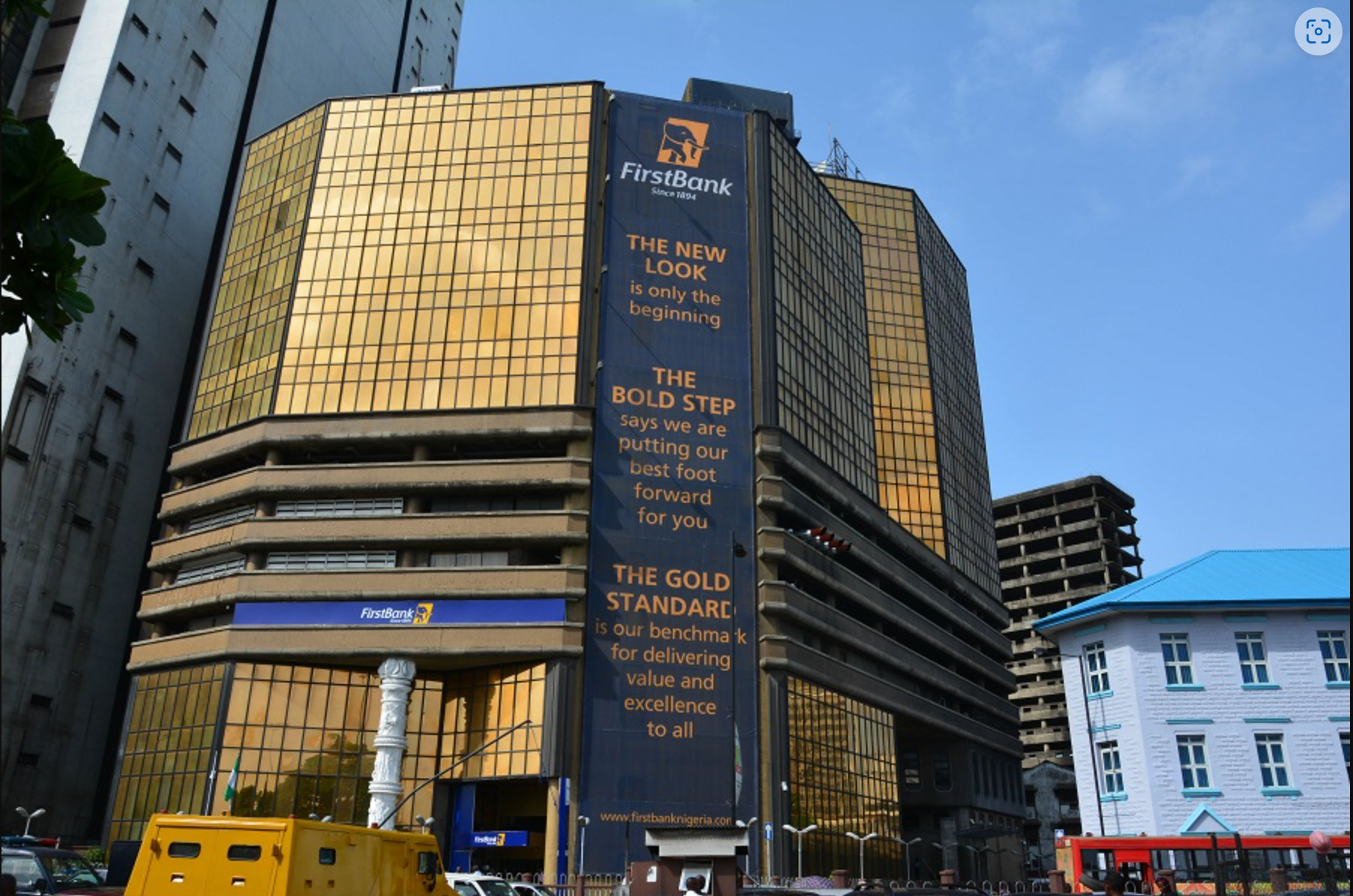
For a 132-year-old institution that has undergone multiple transformations since its establishment in 1894, the heart of its operations – as it continues to adapt to industry shifts and regulatory changes – lies in one of its most important pivots: governance.
It is widely understood that the most significant decision a financial institution makes is not a capital allocation or lending choice, but a governance decision.
Who sits in the boardroom, what kind of accountability they influence, and the structure of internal discipline are variables that often determine the long-term credibility of a bank. Governance failures can weaken a financial institution’s credibility and value faster than weak earnings.
Markets and investors understand the critical role of governance transitions in banking. That is why investors study board composition and shareholder behaviour before projections. That is why for a strategic financial institution like FirstBank – the flagship subsidiary of FirstHoldCo Plc – the most important element in its recent repositioning is not only performance in earnings, but also governance.
Other News
Governance is the main story of any financial institution. It is the infrastructure that builds the trust between investors and depositors, regulators and capital markets.
FirstHoldco Plc’s performance in the first-quarter (Q1) of 2026 shows this transition. The group recorded a 72 per cent year-on-year growth in Profit Before Tax (PBT) growth, rising to N321.1 billion from N186.4 billion in Q1 2025. Also, its annualized Return on Equity (ROE) rose to 31.6 per cent, ahead of most of its tier-one peers.
The strong Q1 2026 performance was supported not only by growth in interest and non-interest income, but also by tighter governance structures, balance-sheet restructuring and improved capital efficiency.
Beyond the numbers, markets understand that banking is largely driven by confidence – confidence of investors, regulators, counterparties and depositors. While institutions can raise capital, upgrade their technology and repair balance sheets, the foundation of long-term stability is institutional trust and accountability.
The Balance-Sheet Clean-up
This reality is exactly why one of the defining moments of FirstBank’s recent repositioning was the large-scale balance-sheet restructuring in late 2025.
Its choice to fully confront legacy exposures rather than defer them across multiple reporting cycles ensured the group completed a ₦826 billion legacy debt clean-up. While this significantly affected short-term profitability and raised impairment charges to N748.1 billion, it reflected a broader institutional decision to prioritise transparency and balance sheet clarity over short-term optics.
In Nigeria’s post-consolidation banking environment, where regulatory forbearance is tightening under the current CBN regime – FirstBank’s decision to absorb these exposures in a single financial year sent a strong signal to the market.
By cleaning up the balance sheet early, the institution showed it was preparing for long-term structural stability.
As publicly stated, the bank fully recognised and accounted for the bad loans as part of a broader effort to clean up its balance sheet and strengthen the institution financially, while efforts to recover the debts continue through legal and business channels.
Otedola’s influence
When FirstBank appointed billionaire investor Femi Otedola as Group Chairman in January 2024, the move was widely seen by analysts as a pointer to the institution’s future governance direction.
From a 5.07 per cent stake in October 2021, Otedola increased his equity position to 7.57 per cent by December 2021, and to 18.12 per cent by late 2025. By May 2026, his holdings had increased further to 19.36 per cent after he acquired 549.5 million shares valued at about N43.4 billion.
Otedola’s increased equity exposure came during critical junctures in the institution’s governance transition. Markets generally interpret this sustained equity exposure, particularly during restructuring periods, as a vote of confidence in its governance direction and long-term positioning.
The billionaire’s influence on FirstBank’s governance direction is also shaped by decades of deep exposure to Nigeria’s corporate and financial ecosystem. Over the years, he held significant shareholder positions across several tier-one banking institutions, while also emerging as the largest individual shareholder in Africa Finance Corporation.
Beyond banking, his investments spanned telecommunications, energy, refining and other large-scale national enterprises. This breadth of boardroom, capital-market and institutional experience strengthens market perception of governance oversight at FirstBank.
The businessman also comes with a strong track record shaped over different decades. In his autobiography, Making It Big, Otedola highlighted how the 2008 recession and a ₦220 billion debt-relief agreement with the Asset Management Corporation of Nigeria (AMCON) reshaped his approach to institutional governance and discipline.
He contrasted the informal structure of Zenon Petroleum with the more disciplined governance framework introduced at Forte Oil, where stronger internal controls, experienced financial management, daily account reconciliation and board oversight became central to operations.
He described corporate governance as “doing things properly,” while emphasising the importance of regular board engagement and institutional accountability within properly structured public companies. By increasing his equity exposure during the transition, Otedola strengthened market interpretation of the bank’s governance direction and long-term capital positioning.
Recapitlisation as a Governance Confidence Test
The Central Bank of Nigeria’s recapitalization exercise was not just a regulatory exercise; it was also a market-wide confidence test of the country’s financial sector.
When the CBN introduced new capital requirements in March 2024, banks with international licences were required to raise their minimum capital base to ₦500 billion by March 2026.
Collectively, Nigerian banks reportedly raised approximately N4.65 trillion in fresh capital, with over 72 per cent sourced domestically and 27.45 per cent from international investors.
Firstbank was among the first institutions to meet the CBN’s minimum requirement in January 2026 through a combination of a Rights Issue, Private Placement and proceeds from strategic divestments, including the sale of its merchant banking subsidiary.
The Rights Issue was oversubscribed, while subsequent capital injections that further strengthened shareholder equity and positioning. A strong governance record and how much a market trusts it are vital to the long-term success of any financial institution.
Banks raise capital successfully when investors believe governance structures are stable, and disclosure standards are credible, leadership oversight is clear and long-term institutional recovery remains plausible. This is why a bank’s successful recapitalisation depends a great deal on its governance record and market credibility.
Otedola’s business history is marked by remarkable corporate restructurings at African Petroleum, Forte Oil, and Geregu Power. His backing of the bank’s recapitalisation strategy has reinforced broader market confidence in the institution’s long-term capital ambitions, including its proposed vision for a ₦1 trillion capital base.
Ultimately, FirstBank’s recapitalisation ahead of the regulatory deadline sends a clear message about governance credibility, market access and investor willingness to support its long-term direction.
Cementing Institutional Trust
Credibility is earned across multiple reporting cycles. By tightening internal standards, strengthening governance oversight, expanding shareholder conviction and enforcing credit obligations, FirstBank has increasingly positioned governance as a central pillar of its institutional growth.
Whether the transition ultimately succeeds will depends on consistency, disclosure discipline and governance continuity over time. But with a 132-year history behind it, FirstBank’s governance, capital and restructuring direction suggest an institution seeking to reposition itself within Nigeria’s evolving banking landscape.
- Arukaino Umukoro is an award-winning journalist, writer and communications strategist.

Nairametrics frequently publishes articles from experts such as financial analysts, economists, researchers and investors. We also feature articles from guest writers and bloggers who wish to push their views and opinions through our platform.
To get your articles on Nairametrics, kindly send an email to
[email protected] and we will publish it within 24 hours of approval by our editorial team.