 Follow Us on Google Discover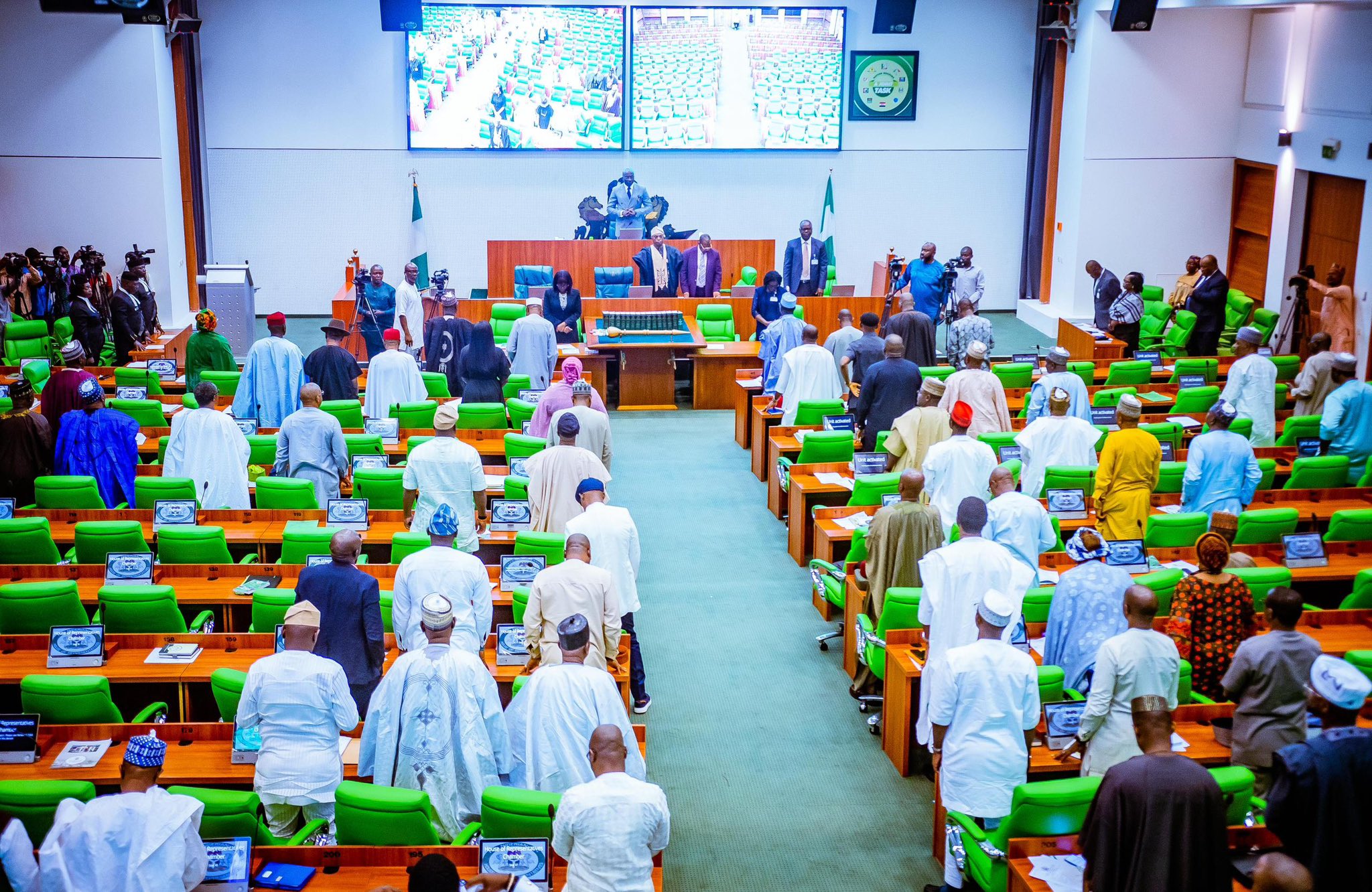
The federal legislative arm of government is central to law enactment processes and reforms that can make or mar investments in a host country.
This is because the business environment of every nation, and the behavior of corporate organizations, are largely shaped by subsisting laws and their implementation, and Nigeria is no exception.
Large corporations are expected to comply with regulatory requirements from relevant authorities or challenge them in a court of competent jurisdiction, but the fact remains that these requirements may be offshoots of enacted legislation.
For instance, some weeks ago, Airtel Nigeria and MTN Nigeria Communications Plc announced the temporary suspension of their airtime and data credit services, citing new regulatory requirements for digital lending by the Federal Competition and Consumer Protection Commission (FCCPC). The resultant effect was widespread criticism from Nigerian users.
Also Read
For the FCCPC, operators are expected to structure their commercial relationships in a manner consistent with Nigerian law.
As of the time of filing this report, Xtratime services on MTN remain unavailable.
According to official documents at the National Assembly seen by Nairametrics, a number of pending bills could shape the business landscape.
Here is a breakdown of the bills:
Cybercrimes (Prohibition, Prevention, etc.) Act (Amendment) Bill, 2026
Sponsored by Hon. Akintunde Rotimi, the bill seeks to clarify Section 24 to prevent vague interpretations that criminalize investigative reporting.
The bill also highlights that disputes relating to publications in the public interest should be addressed through civil remedies rather than criminal prosecution, while journalists and whistleblowers are to be exempted from prosecution when handling confidential information lawfully.
Media professionals have faced scrutiny under the Act. Civil society groups argue that the government risks using the cybercrime law as a backdoor to stifle press freedom.
The bill was scheduled for first reading in April 2026.
West African Gas Pipeline Project Act (Amendment) Bill, 2026
Sponsored by Hon. Francis E. Waive, Hon. Babajimi Benson, and Hon. Yusuf Rabiu, the main goal of the amendment is to grant the West African Gas Pipeline Authority (WAGPA) the explicit power to implement a new licensing regime for all shippers utilizing the pipeline.
The amendment comes amid comments by the Minister of State for Petroleum Resources (Gas), Ekperikpe Ekpo, that Nigeria supplies over 68% of the gas currently flowing through the 678km subsea link.
The minister also stated that the country has the capacity to grow its gas production to over 5 billion cubic feet per day by 2030.
The bill has progressed to second reading.
National Alcohol Control Bill, 2025
Sponsored by Hon. Adelegbe Oluwatimehin, the bill seeks to regulate the production, importation, distribution, advertising, and consumption of alcohol products.
If passed, the bill would, among other things, tighten regulations on alcohol advertising and access — a development that would significantly impact alcohol-related businesses.
According to the Director-General of the Spirits and Wines Association of Nigeria (SWAN), Tony Okwoju, Nigeria loses an estimated N428 billion annually to illicit trade in spirits and wines.
Bill Seeking to Establish a 50-Year National Economic Plan for Nigeria
Sponsored by Amobi Ogah, the proposed bill seeks to ensure continuity in national development and sustained implementation across successive administrations.
- “A 50-year national economic plan for Nigeria, 2026–2076, represents a bold and transformative legislative initiative aimed at addressing one of the country’s persistent development challenges — policy inconsistency and short-term economic planning,” the legislator said.
The bill seeks to establish a new institution that will be responsible for the development, implementation, and monitoring of a comprehensive 50-year national economic master plan.
The bill has scaled through second reading in the House of Representatives.
Nigerian Minerals and Mining Act (Amendment) Bill, 2026
Sponsored by Hon. Kabiru Amadu Mai-Palace, the bill seeks to amend the principal Act (2007) to update regulations, balance federal and state control with respect to mining rights, and protect host communities.
The bill, currently pending at the National Assembly, is expected to clarify gaps in disputes involving the federal government, state governments, and operators of several mining sites.
While Nigeria stands as Africa’s leading energy producer, it has struggled to maximize its extensive mineral resources due to insufficient incentives, illegal activities, low investment levels, and prolonged neglect.
As of 2025, the nation’s underdeveloped mining sector contributed less than 1% to its gross domestic product.
Bill to Establish Fintech Regulatory Commission
Sponsored by Fuad Kayode Laguda, the bill seeks to establish the Nigeria Fintech Regulatory Commission (NFRC) as the proposed regulatory authority that would license, supervise, and regulate the fintech sector in the country.
The argument behind the bill is that fintech platforms are often subjected to multiple agency compliance requirements, leading to significant bottlenecks.
Reports indicate that the number of fintech firms in Nigeria surpassed 430 in 2025, with nine leading firms holding a combined valuation of $10.6 billion as of January 2026.
National Blue Economy Growth, Jobs and Credit Guarantee (Establishment) Bill
The bill, among other things, is designed to unlock economic opportunities and stimulate sustainable growth in Nigeria’s maritime sector.
The bill was introduced in April this year and is being sponsored by Rep. Thomas Ereyitomi.