 Follow Us on Google Discover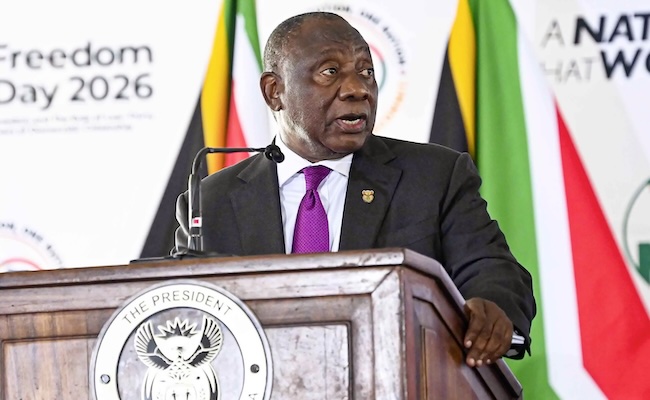
South African President Cyril Ramaphosa has linked rising xenophobic tensions in the country to the growing challenge of illegal immigration, warning that undocumented migration is putting pressure on jobs, public services, and social stability in vulnerable communities.
The remarks is contained in a statement published Monday on the official website of the South African Presidency.
This comes amid renewed attacks and harassment targeting foreign nationals and foreign-owned businesses in Johannesburg and surrounding areas.
What they are saying
President Cyril Ramaphosa condemned the recent violence, stressing that the attacks do not reflect South African values or government policy. He said the incidents are being driven by criminal elements exploiting socio-economic frustrations in poorer communities.
Also Read
- “The recent violent protests and criminal acts directed at foreign nationals in parts of our country do not represent the views of South Africa’s people nor reflect our government’s policy,” Ramaphosa said.
He directly linked illegal immigration to labour and service pressure, stating:
- “At the same time, as a society, we need to deal decisively – and within the law – with the challenge of illegal immigration, which risks our social stability, governance and national security.”
He added that undocumented migration places strain on healthcare, housing and municipal services, particularly in poor communities, and distorts the labour market by encouraging some employers to hire cheaper undocumented foreign labour instead of citizens.
Ramaphosa further stated that illegal immigration poses risks to “social stability, governance and national security,” noting that it places additional pressure on public infrastructure in already underserved areas.
He added that government enforcement would be strengthened through the Border Management Authority and other security agencies, with increased action against employers violating immigration and labour laws.
Backstory
South Africa has faced recurring waves of xenophobic violence over the past decade, often linked to unemployment, inequality, and competition in informal markets.
These tensions have periodically escalated into attacks on foreign nationals, particularly African migrants operating small businesses in urban settlements.
The latest incidents come against a backdrop of long-standing concerns about immigration enforcement and service delivery challenges in densely populated communities. Foreign-owned shops often operate alongside local traders, sometimes leading to disputes over pricing, space, and regulation.
Previous outbreaks of xenophobic violence in 2008 and 2015 resulted in deaths, displacement, and diplomatic tensions across the continent, making immigration a sensitive and recurring political issue in South Africa.
What you should know
Nigeria has intensified diplomatic engagement over recent attacks on foreign nationals in South Africa, following the summoning of South Africa’s Acting High Commissioner by the Nigeria Ministry of Foreign Affairs over rising concerns for the safety of Nigerian citizens.
The meeting, held on Monday, May 4, was prompted by renewed reports of violence against foreign nationals and formed part of Nigeria’s push for clarity and stronger protection measures for its citizens.
- The Nigerians in Diaspora Commission (NIDCOM) also raised alarm over the situation, confirming that at least two Nigerians — Amaramiro Emmanuel and Ekpenyong Andrew — were killed in separate incidents linked to anti-foreigner tensions.
- It has called for stronger security presence, swift prosecution of perpetrators, and structured bilateral dialogue between both countries to address recurring tensions.
The developments highlight growing diplomatic pressure on South African authorities to tackle xenophobic violence while balancing migration enforcement with human rights obligations.

Caleb Obiowo is a graduate of Urban and Regional Planning from the University of Uyo. At Nairametrics, he covers transport and logistics in Nigeria, along with real estate, construction, and aviation. He focuses on delivering clear, easy-to-understand stories and often digs deeper into industry issues through conversations with key players.