 Follow Us on Google Discover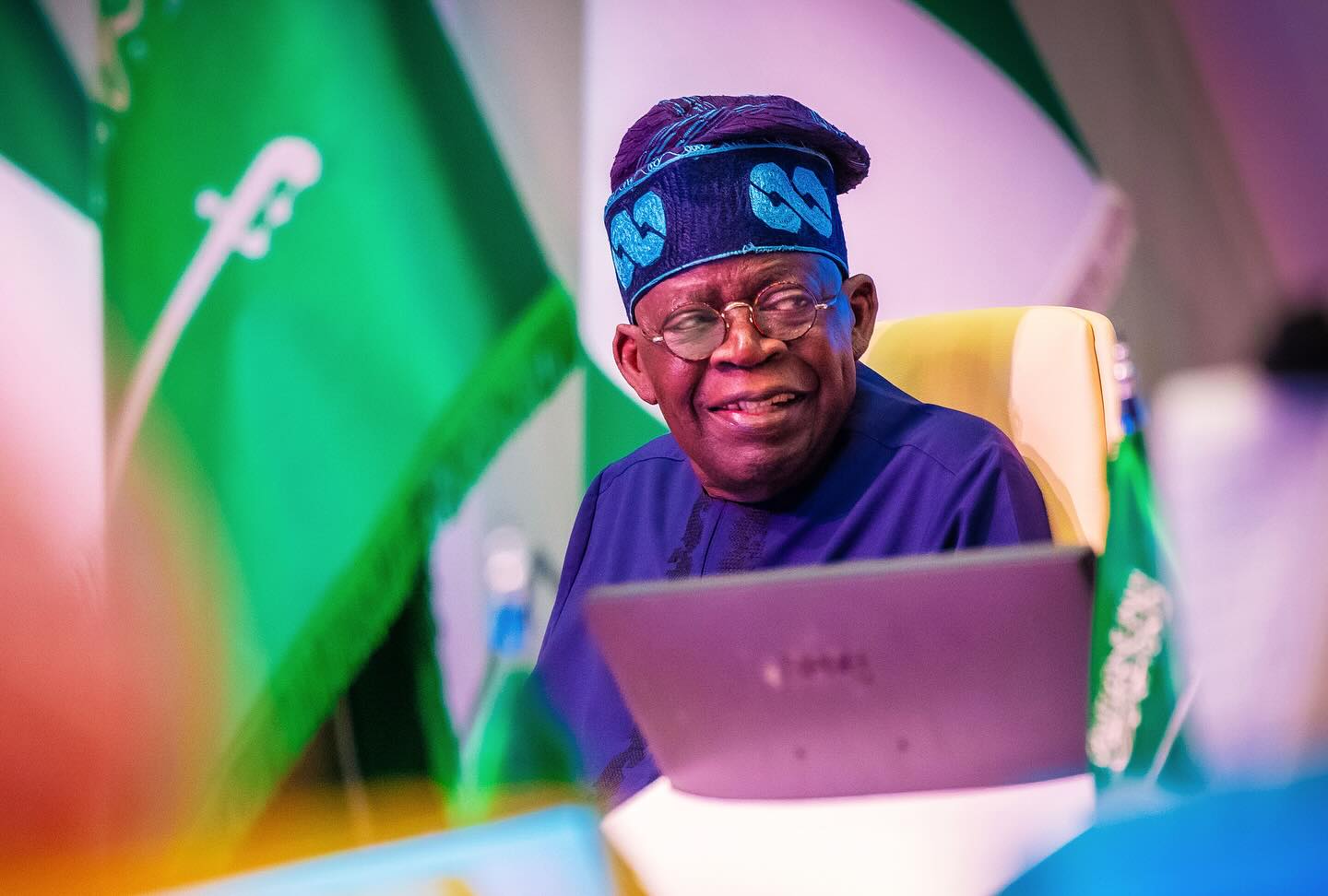
President Bola Ahmed Tinubu has said his administration has laid the foundation for Nigeria’s economic recovery, insisting that difficult reforms introduced over the past three years prevented the country from drifting into fiscal collapse and deeper economic uncertainty.
Tinubu stated this on Friday in a statement commemorating the third anniversary of his administration, which was posted on X by presidential spokesperson Bayo Onanuga.
The President, who won the 2023 presidential election on the platform of the All Progressives Congress (APC), emerged victorious in what was widely described as a three-horse race against former Vice President Atiku Abubakar of the Peoples Democratic Party (PDP) and Peter Obi of the Labour Party.
All three politicians have secured their parties’ presidential tickets ahead of the 2027 general election.
Also Read
What Tinubu is saying
Reflecting on his administration’s journey since assuming office in May 2023, Tinubu said he accepted the responsibility of leading Nigeria at a difficult moment in the country’s history, while expressing confidence in the resilience and potential of Nigerians despite prevailing economic challenges.
According to him, his administration inherited mounting fiscal pressures, unsustainable fuel subsidies, exchange-rate distortions, rising debt-servicing costs, insecurity, energy supply constraints, and declining public trust in institutions.
- “At the height of the subsidy regime, Nigeria was spending as much as N18.4 billion daily to sustain petrol subsidies—over N4 trillion in 2022 alone,” Tinubu said.
He added that multiple exchange-rate windows and foreign exchange arbitrage cost the country more than N8 trillion over three years through speculative activities and rent-seeking practices.
The President said the economic realities forced his administration to take “difficult but necessary” decisions to stabilise the economy and avert a deeper national crisis.
- “We have not solved every problem, and we are not yet where we want to be. But the foundation for recovery has been laid. The task before us now is clear: we must ensure that the benefits of reform are felt more directly in the daily lives of ordinary Nigerians,” he said.
Tinubu acknowledged that the reforms came with painful sacrifices, including a rising cost of living that placed pressure on households, workers, and businesses, but maintained that the measures were necessary to secure long-term stability.
More insights
Tinubu said the reforms were already producing visible progress across several sectors of the economy, arguing that Nigeria is now better positioned for sustainable growth than it was in 2023.
- According to him, investor confidence is improving, while the Nigerian stock market has experienced significant growth, with the All Share Index rising from 53,000 in 2023 to 250,000 in 2026, and market capitalisation increasing from N30 trillion to N160 trillion.
The President also highlighted ongoing infrastructure projects, including the Lagos-Calabar Coastal Highway, Sokoto-Badagry Super Highway, Abuja-Kaduna-Zaria-Kano Road, and the East-West Road, saying over 2,700 kilometres of highways and major roads are currently under construction, reconstruction, or rehabilitation nationwide.
Rail modernisation projects, he added, are also ongoing to improve logistics, connectivity, and economic integration across the country.
- In the oil and gas sector, Tinubu said reforms had attracted fresh investments from international oil companies, while the $5 billion NLNG Train 7 project was nearing completion.
He further stated that increased local refining capacity and the operation of modular refineries were helping Nigeria reduce dependence on imported petroleum products and conserve foreign exchange.
Agriculture, education, and housing
Under agriculture, Tinubu said government interventions had supported millions of farmers through improved seedlings, fertilisers, irrigation, mechanisation, and expanded access to financing and markets.
- In education, he disclosed that the Nigerian Education Loan Fund had provided over 1.5 million students with access to higher education, disbursing more than N282 billion in student loans.
The President also said the Renewed Hope Housing Programme and projects by the Federal Housing Authority were delivering over 10,000 housing units across 14 states and the Federal Capital Territory, while creating more than 300,000 jobs.
Healthcare and telecommunications
Tinubu said thousands of primary healthcare centres were being revitalised nationwide, while health insurance coverage was expanding for vulnerable Nigerians.
He also stated that government interventions had helped stabilise the telecommunications sector, with operators expanding network infrastructure, investing in digital access, and recruiting Nigerian talent.
Youth and security
The President said his administration was investing in digital skills, technical education, innovation, and entrepreneurship to position young Nigerians for opportunities in technology, manufacturing, agriculture, and creative industries.
On security, Tinubu said security agencies had intensified operations against terrorists, kidnappers, bandits, oil thieves, and other criminal networks, adding that some communities and highways were gradually becoming safer.
What you should know
Despite the administration’s optimism about economic recovery, macroeconomic pressures continue to weigh heavily on households and businesses across the country, raising questions about whether the government’s reforms have translated into improved living conditions for ordinary Nigerians.
- Nigeria’s headline inflation rate rose to 15.69% in April 2026 from 15.38% recorded in March, according to the latest Consumer Price Index report released by the National Bureau of Statistics (NBS).
- Global oil prices have also continued to rise amid escalating tensions in the Middle East, with Brent crude increasing sharply to $120.4 per barrel in April from $103.7 in March. The surge has contributed to rising petrol prices in Nigeria following the removal of fuel subsidies and the country’s increasing exposure to global market dynamics.
- Similarly, the Food and Agriculture Organization (FAO) Food Price Index rose by 1.6% to 130.7 points, marking its third consecutive monthly increase, reflecting continued global pressure on food prices.
Meanwhile, the Central Bank of Nigeria (CBN), at its last Monetary Policy Committee meeting, reduced the Monetary Policy Rate (MPR) by 50 basis points to 26.5% from 27%, signalling an attempt by the apex bank to ease borrowing costs and stimulate economic growth after months of aggressive monetary tightening aimed at curbing inflation.
Tinubu, who has already secured the APC presidential ticket for the 2027 election, is expected to be on the ballot next year as he seeks a second and final term in office.

Emmanuel Azubuike is a human interest journalist based in Lagos, Nigeria. With over four years of experience in journalism, he focuses on telling deeply reported stories at the intersection of markets, government policy, and technological advancement — and how they shape everyday lives.