 Follow Us on Google Discover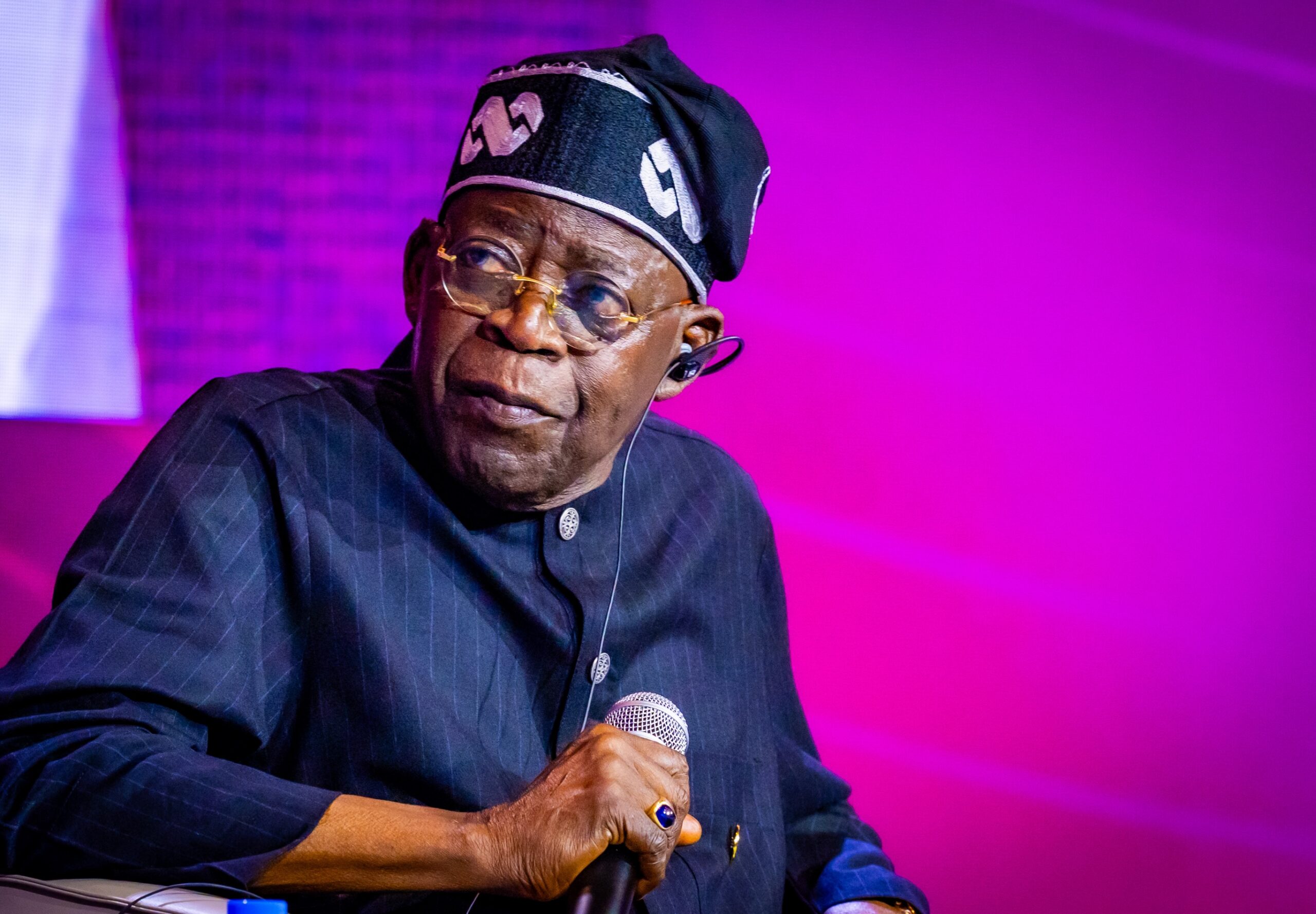
As Nigeria marks three years since the inauguration of President Bola Ahmed Tinubu, his administration continues to defend an economic reform agenda driven by fuel subsidy removal, foreign exchange reforms, stronger government revenues and renewed investor confidence.
This is as many Nigerians grapple with rising inflation, growing public debt and worsening living conditions across the country.
Tinubu’s economic policies remain among the most debated issues in Nigeria’s economic landscape.
Supporters argue that the reforms have restored fiscal stability and improved macroeconomic indicators, while critics maintain that the burden of adjustment has fallen heavily on households and businesses.
Also Read
What the data is saying
Several macroeconomic indicators improved under the administration despite persistent inflationary pressures and fiscal challenges.
Nigeria’s real Gross Domestic Product (GDP) recorded steady growth over the past three years, reflecting gradual economic expansion amid structural challenges.
- Nigeria’s GDP growth improved from 2.54% in Q3 2023 to 3.46% in Q4 2023. Growth averaged 3.19% in 2024 and strengthened further to 3.85% in 2025, representing the strongest annual performance within the review period.
- In Q1 2026, GDP growth remained positive at 3.89%, bringing average quarterly growth between Q3 2023 and Q1 2026 to approximately 3.46%.
- External reserves rose to about $49.26 billion as of May 25, 2026, compared to $35.09 billion in May 2023, while monthly revenue generation increased from N711 billion in May 2023 to over N3.635 trillion by September 2025, according to Nigeria Revenue Service Chairman Zacch Adedeji.
- Nigeria’s tax-to-GDP ratio also increased to 13.5% following tax reforms and improved revenue collection efforts.
Despite the improved macroeconomic indicators, inflationary pressures and rising living costs continue to weigh heavily on households and businesses.
More Insights
One of the administration’s most significant policy decisions was the removal of the petrol subsidy shortly after President Tinubu assumed office in 2023. The policy significantly altered Nigeria’s fiscal structure and revenue allocation framework.
- Analysts estimate that ending the fuel subsidy saved the government between N4 trillion and N6 trillion annually in fiscal costs.
- Latest data shows that FAAC shared N2.036 trillion among the Federal Government, states and local government councils for March 2026, compared to N629 billion shared in March 2023.
- The administration also discontinued the Central Bank of Nigeria’s “Ways and Means” overdraft financing arrangement, which had contributed to liquidity expansion and inflationary pressures.
- Foreign exchange reforms aimed at unifying Nigeria’s multiple exchange rate windows improved transparency within the FX market despite continued volatility in the naira.
However, the reforms triggered immediate increases in fuel prices, transportation costs and food inflation, worsening pressure on household incomes and small businesses.
Public debt goes through the roof under Tinubu
Despite stronger revenue performance, Nigeria’s public debt and debt servicing obligations have risen sharply under the current administration.
According to the Debt Management Office (DMO), total public debt stood at N87.38 trillion as of June 30, 2023, shortly after Tinubu assumed office.
- By December 31, 2025, Nigeria’s total public debt had increased significantly to N159.28 trillion, reflecting rising borrowing levels, exchange rate adjustments and securitisation of legacy obligations.
- Nigeria’s total external debt rose from $42.49 billion in December 2023 to $51.86 billion by December 2025, while domestic debt increased from N59.1 trillion to N89.4 trillion within the same period.
- The fiscal deficit for 2024 rose sharply to N13.51 trillion, pushing the deficit-to-GDP ratio above the legal threshold permitted under the Fiscal Responsibility Act 2007.
- Total debt service payments climbed from N7.79 trillion in 2023 to N16.26 trillion in 2025, with quarterly debt service peaking at a record N4.86 trillion in Q4 2025.
The CEO of the Centre for the Promotion of Private Enterprise (CPPE), Dr. Muda Yusuf, attributed the rising debt partly to the discontinuation of “Ways and Means” financing.
- “One of the reasons is before he [President Tinubu] came in, there was the option of printing money – ‘Ways and Means’. But the ‘Ways and Means’ was stopped,” Yusuf said.
- “So, that also created a gap. And the revenue generation was not moving fast enough to fill that gap. I think that is one of the major reasons we have this aggressive borrowing.”
Economists warn that while borrowing may have helped sustain fiscal operations, rising debt service obligations continue to place pressure on public finances.
Expert views
Economic observers said the Tinubu administration’s reforms have produced mixed outcomes — improving fiscal sustainability and investor confidence while intensifying short-term hardship for millions of Nigerians.
Dr. Almarouf Ojelabi of the University of Abuja said subsidy removal and exchange rate reforms were inevitable decisions that previous administrations avoided for political reasons.
- “The reforms have corrected major distortions in the economy, especially around fuel subsidies and foreign exchange pricing.
- “However, the social costs have been very severe because the reforms were introduced in an environment of weak productivity, poor infrastructure and low purchasing power,” he said.
- Financial analyst Yusuf Ahmed stated that “there is more transparency in the FX market today compared to what existed before 2023. Investors prefer clarity even when the exchange rate is painful.”
- Public affairs analyst Bimbo Omipidan added that “you cannot implement painful reforms in a low-income economy without strong social protection systems.”
Experts, however, maintained that inflation remains one of the biggest threats to economic stability and household welfare despite improvements in fiscal indicators.
What you should know
Beyond fiscal reforms, the Tinubu administration has also prioritised infrastructure expansion and capital market growth as part of its long-term economic strategy.
- The proposed Lagos–Calabar Coastal Highway remains one of the administration’s flagship infrastructure projects aimed at improving trade, logistics and regional integration.
- In December 2025, the Federal Government secured about $1.2 billion in financing from the United Arab Emirates to support construction of a key segment of the highway, while another $747 million financing package was secured in July.
- Nigeria’s stock market has also recorded one of its strongest rallies under any civilian administration since 1999, with the All-Share Index rising by about 136% since May 2023, according to a Nairametrics analysis.
- The ASI, which stood at 55,769.28 points on May 29, 2023, has climbed to around 131,000 points amid investor optimism linked to economic liberalisation and banking sector recapitalisation.
As Nigeria commemorates three years of President Tinubu’s administration, debates over the long-term impact of the reforms are expected to remain central to the country’s political and economic discussions ahead of the next electoral cycle.

Olalekan Adigun is a seasoned political analyst and writer with extensive experience in crafting compelling narratives and executing strategic initiatives. Known for his insightful commentary on governance, policy, and socio-economic issues, he has contributed to various national and international platforms.